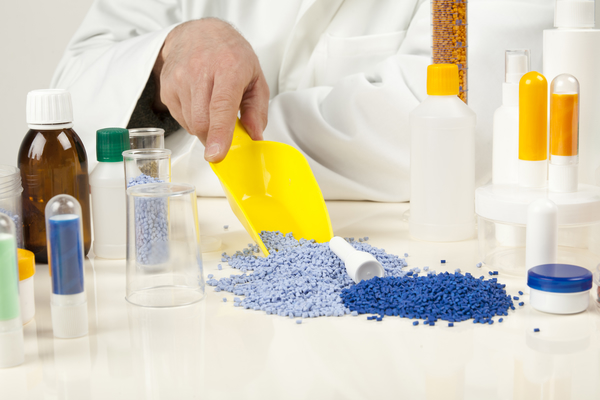
Polymer Synthesis Services
-
 Copolymer Synthesis
-
 Biodegradable Polymer Synthesis
-
 Block Copolymer Synthesis
-
 Dendrimer Synthesis
-
 Functional Polymer Synthesis
-
 Graft Polymer Synthesis
-
 Homopolymer Synthesis
-
 Hyperbranched Polymer Synthesis
-
 Star Polymer Synthesis
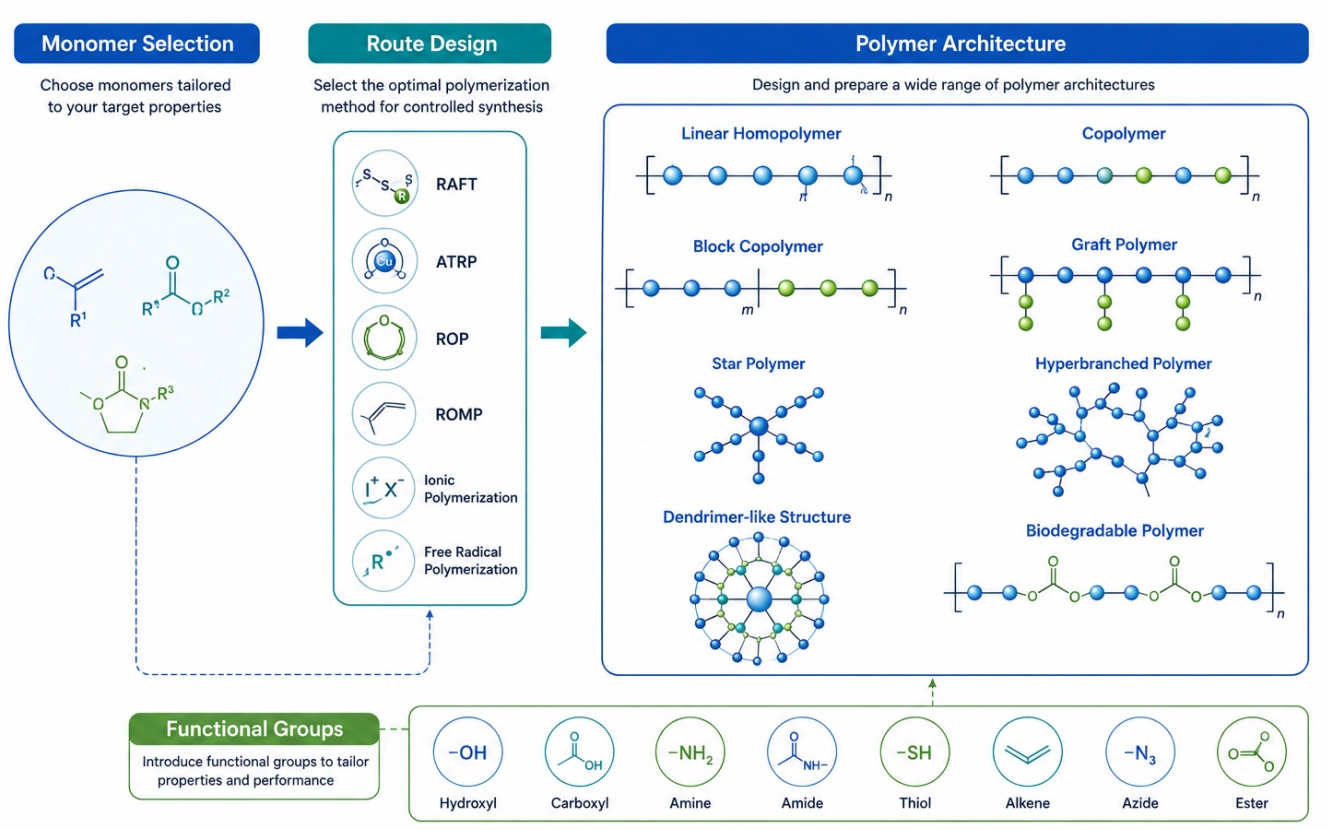
Polymer synthesis services support the design and preparation of customized polymer materials with defined composition, molecular weight, dispersity, architecture, functionality, purity, and sample format. BOC Sciences provides integrated custom polymer synthesis solutions for homopolymers, copolymers, block copolymers, graft polymers, star polymers, hyperbranched polymers, functional polymers, biodegradable polymers, and dendrimer structures. Our services cover target polymer definition, monomer assessment, route feasibility evaluation, synthesis strategy design, small-scale preparation, purification, characterization, and technical delivery. By combining polymerization technologies, monomer synthesis service, polymer characterization service, and polymer modification service, BOC Sciences helps clients obtain purpose-designed polymer samples for material research, formulation development, functional material exploration, and application-oriented polymer development.
Polymer Synthesis Solutions Offered by BOC Sciences
BOC Sciences provides custom polymer synthesis solutions for diverse polymer structures, from simple homopolymers and copolymers to complex branched, grafted, star-shaped, hyperbranched, functional, biodegradable, and dendritic polymers. Each synthesis project is designed according to monomer compatibility, target molecular weight, dispersity, polymer architecture, functional group requirements, purification feasibility, and intended material application.
Homopolymer Synthesis
- Supports synthesis of structurally defined polymers from a single monomer type.
- Applicable to acrylates, methacrylates, styrenics, vinyl monomers, cyclic monomers, and other compatible systems.
- Molecular weight, dispersity, end groups, purity, and sample format can be adjusted according to project needs.
- Suitable for material research, polymer standards, formulation evaluation, and comparative property studies.
Copolymer Synthesis
- Supports random, alternating, gradient, and composition-adjusted copolymer synthesis.
- Copolymer composition can be designed according to monomer reactivity, feed ratio, and polymerization route.
- Key parameters include monomer conversion, composition drift, Tg, solubility, thermal behavior, and reproducibility.
- Suitable for coatings, adhesives, dispersions, functional materials, and structure-property relationship studies.
Block Copolymer Synthesis
- Supports AB, ABA, multiblock, and amphiphilic block copolymer synthesis.
- Routes may include RAFT, ATRP, NMP, ROP, living anionic polymerization, or combined strategies.
- Development focuses on block ratio, chain extension efficiency, end-group fidelity, molecular weight distribution, and purification.
- Suitable for self-assembly, micelles, nanostructures, phase-separated materials, and functional carrier materials.
Graft Polymer Synthesis
- Supports grafting-from, grafting-to, and macromonomer-based graft polymer strategies.
- Main chain, side-chain length, grafting density, functional side chains, and surface-grafted structures can be designed.
- Key considerations include reactive site density, grafting efficiency, solubility, molecular weight analysis, and structure confirmation.
- Suitable for surface modification, polymer brushes, dispersion stabilization, interface materials, and composites.
Star Polymer Synthesis
- Supports multi-arm star polymers through core-first, arm-first, or multifunctional initiator strategies.
- Arm number, arm length, core structure, end groups, and functional groups can be designed according to target performance.
- Development focuses on molecular weight control, arm uniformity, core reaction efficiency, and structural characterization.
- Suitable for low-viscosity polymers, nanomaterials, self-assembly systems, and special rheological materials.
Hyperbranched Polymer Synthesis
- Supports custom synthesis of highly branched polymers with three-dimensional structures and multiple terminal groups.
- Synthetic routes may involve ABx monomer polymerization, step-growth strategies, or functional monomer copolymerization.
- Key parameters include branching degree, terminal group density, solubility, molecular weight distribution, and functional group accessibility.
- Suitable for coatings, additives, nanocomposites, adsorption materials, and multifunctional interface materials.
Functional Polymer Synthesis
- Supports polymers containing carboxyl, amino, hydroxyl, thiol, azide, alkyne, epoxy, silane, PEG, fluorescent, or responsive groups.
- Functional polymers can be prepared by direct functional monomer polymerization, end-group design, or post-polymerization modification.
- Development considers functional group stability, reaction compatibility, functionalization degree, and purification strategy.
- Suitable for grafting, conjugation, crosslinking, surface modification, sensing materials, and functional material development.
Biodegradable Polymer Synthesis
- Supports PLA, PLGA, PCL, polyesters, polycarbonates, polyanhydrides, polyethers, and related copolymers.
- Common routes include ring-opening polymerization, condensation polymerization, copolymerization, and end-group control strategies.
- Key factors include monomer purity, catalyst system, molecular weight, end-group structure, thermal behavior, and degradation behavior.
- Suitable for material research, films, fibers, microspheres, nanoparticles, hydrogel precursors, and functional polymers.
Dendrimer Synthesis Services
- Supports dendritic polymers, generation-controlled dendrimer structures, and multi-functional terminal group materials.
- Core structure, branching units, generation, terminal groups, and surface functionality can be designed according to project goals.
- Development focuses on stepwise synthesis efficiency, structural uniformity, terminal group conversion, purification difficulty, and characterization.
- Suitable for nanomaterials, molecular carriers, surface functionalization, multivalent recognition, and high-density functional materials.
Need a Custom Polymer for Your Research or Material Development?
Share your target polymer structure, monomer information, molecular weight range, dispersity requirement, functional group needs, and target quantity. BOC Sciences can evaluate feasible synthesis strategies and prepare a customized polymer synthesis proposal.
Core Services for Custom Polymer Synthesis
BOC Sciences provides custom polymer synthesis services that support the full development path from target structure definition to polymer sample delivery. Our services include feasibility assessment, polymerization route development, polymer and copolymer preparation, molecular weight control, functional group design, purification, characterization, and technical documentation according to the specific goals of each project.
1Polymer Design and Feasibility Assessment
- Evaluates target polymer structure, monomer availability, functional group compatibility, molecular weight range, and application needs.
- Reviews whether the project is better suited to radical, controlled radical, ring-opening, ionic, condensation, or emulsion polymerization.
- Identifies possible risks related to monomer purity, inhibitors, side reactions, solubility, purification difficulty, and structural stability.
- Provides a practical starting plan and required project information before experimental synthesis begins.
2Polymerization Route Development
- Designs routes using RAFT Polymerization, ATRP Polymerization, ROP, ROMP, NMP, free radical, ionic, emulsion, or condensation strategies.
- Selects initiators, catalysts, chain transfer agents, solvents, reaction temperature, reaction time, and feeding sequence.
- Develops stepwise synthesis, chain extension, grafting, or post-modification routes for complex polymer structures.
- Considers reaction reproducibility, purification feasibility, sample format, and later scale-up discussion during route design.
3Custom Polymer and Copolymer Preparation
- Prepares homopolymers, random copolymers, block copolymers, graft polymers, crosslinked polymers, and functional polymers.
- Supports milligram-scale exploration, gram-scale preparation, and larger laboratory-scale polymer sample production.
- Adjusts conversion, composition, molecular weight, dispersity, and sample form according to project requirements.
- Provides polymer samples for material research, formulation validation, structure-property studies, and downstream evaluation.
4Molecular Weight and Architecture Control
- Supports control of Mn, Mw, dispersity, chain length, block ratio, branching structure, and crosslinking density.
- Tunes monomer-to-initiator ratio, catalyst system, chain transfer agent, reaction time, temperature, and purification conditions.
- Supports linear, block, graft, star, brush-like, network, particle, and dendritic polymer structures.
- Uses GPC/SEC, NMR, and related methods to verify molecular weight and structural features.
5Functional Group and End-group Design
- Introduces carboxyl, hydroxyl, amino, thiol, azide, alkyne, epoxy, silane, PEG, fluorescent, or responsive groups.
- Designs reactive chain ends or side groups for side and end group functionalization, grafting, conjugation, crosslinking, or surface modification.
- Evaluates functional group stability during polymerization, purification, storage, and post-polymerization modification.
- Can connect with polymer bioconjugation service when non-clinical functional material development requires conjugation-ready polymers.
6Purification and Sample Preparation
- Provides polymer isolation and purification by precipitation, dialysis, extraction, column separation, ultrafiltration, centrifugation, or drying.
- Prepares samples as powder, solid, solution, colloidal dispersion, latex, film, microsphere, micelle, or hydrogel when feasible.
- Removes or reduces residual monomers, oligomers, catalysts, salts, surfactants, and small-molecule impurities.
- Communicates how purification method may affect yield, molecular weight distribution, sample morphology, and final format.
7Characterization and Technical Delivery
- Supports GPC/SEC, NMR, FTIR, DSC, TGA, elemental analysis, particle size, Zeta potential, SEM/TEM, rheology, and mechanical tests.
- Can connect with polymer thermal analysis, physical testing, morphology analysis, and chemical analysis as needed.
- Delivers polymer samples, synthesis summaries, purification notes, analytical data, and technical observations.
- Recommends practical characterization combinations based on polymer type, sample form, and project purpose.
Polymer Systems Available for Custom Synthesis
BOC Sciences provides synthesis support for a broad range of polymer systems, from degradable polyesters and PEG derivatives to silicones, polyphosphazenes, reactive polymers, and specialty architectures. Each polymer type can be developed according to target backbone chemistry, functional groups, molecular weight range, polymer architecture, sample format, and intended material application.

Polylactides and other Biodegradable Polymers
- Polylactides (PLA), including PLLA, PDLA, and PDLLA
- Poly(Lactide-co-Glycolide) (PLGA) Copolymers
- Polycaprolactone (PCL), PGA, and biodegradable polyester systems
- Biodegradable AB Diblock or ABA Triblock Copolymers
- End-functional biodegradable polymers and degradable polymer precursors
Epoxy Resins
- Epoxy-functional polymers and epoxy resin intermediates
- Crosslinkable epoxy polymers for coating and adhesive systems
- Star-like Polymers
- Amphiphilic Block Copolymers
- Epoxy-modified functional polymers and hybrid materials
Silicones
- Silicone oils
- Polysiloxanes - Copolymers and Homopolymers
- Vinyl-, hydroxyl-, amino-, or epoxy-functional silicones
- Silicone-polyether and silicone-organic hybrid polymers
- Silane-terminated polymers for coating and surface modification
Polyphosphazenes
- Poly(bis(4-carboxyphenoxy)phosphazene)
- Poly(bis(1-(ethoxycarbonyl)methylamino)phosphazene)
- Poly(bis(4-(ethoxycarbonyl)phenoxy)phosphazene)
- Amino-, alkoxy-, aryloxy-, or ester-substituted polyphosphazenes
- Functional polyphosphazenes for specialty material development
Poly(ethylene glycol)s (PEGs) & Derivatives
- Poly(ethylene glycol) monomethyl ether (mPEG)
- Aliphatic Block PEGs
- Specialty Functional PEGs
- Multi-arm PEGs and heterofunctional PEG derivatives
- PEG-based block copolymers and hydrogel precursors
Polyphosphoesters
- Poly[1,4-bis(hydroxyethyl)terephthalate-alt-ethyloxyphosphate]
- Poly[1,4-bis(hydroxyethyl)terephthalate-alt-ethyloxyphosphate]-co-1,4-bis(hydroxyethyl)terephthalate-co-terephthalate
- Poly[(lactide-co-ethylene glycol)-co-ethyloxyphosphate]
- Phosphate-containing polyesters and degradable copolymers
- Functional polyphosphoesters with tunable side groups
Reactive Polymers
- Carboxylic Acid Anhydride Functional Polymers
- Carboxylic Acid Chloride Functional Polymers
- Hydroxyl Functional Polymers
- Amino, thiol, epoxy, azide, alkyne, and silane functional polymers
- Crosslinkable, clickable, and post-modifiable polymer platforms
Polyphosphoesters
- Poly[1,4-bis(hydroxyethyl)terephthalate-alt-ethyloxyphosphate]
- Poly[1,4-bis(hydroxyethyl)terephthalate-alt-ethyloxyphosphate]-co-1,4-bis(hydroxyethyl)terephthalate-co-terephthalate
- Poly[(lactide-co-ethylene glycol)-co-ethyloxyphosphate]
- Phosphorus-containing biodegradable polymers
- Functional phosphoester copolymers for soft and degradable materials
Polyanhydrides and Polyesters
- Polyanhydride
- Polyesters
- Trimethylene carbonate-based polymers and copolymers
- Aliphatic, aromatic, and functional polyester systems
- Polyester-based block, random, and degradable copolymers
And Many More
- Acrylic polymers, vinyl polymers, polyethers, and polyamides
- Homopolymers, copolymers, block copolymers, and graft polymers
- Star polymers, dendrimers, hyperbranched polymers, and specialty architectures
- Fluorescent, ionic, amphiphilic, and stimuli-responsive polymers
- Project-specific polymer systems designed for advanced material research
Polymer Synthesis Scope and Characterization Support
Custom polymer synthesis requires analytical confirmation of molecular weight, composition, functional groups, thermal behavior, morphology, and sample quality. BOC Sciences helps clients select appropriate characterization methods according to the target polymer structure and sample format. The table below summarizes common synthesis targets, service priorities, key control items, and recommended analytical methods.
| Synthesis Target | Service Focus | Key Control Items | Typical Characterization |
|---|---|---|---|
| Homopolymers | Single monomer polymerization and route optimization | Conversion, Mn, Mw, dispersity, solubility | GPC/SEC, NMR, FTIR |
| Random Copolymers | Multi-monomer composition design | Monomer ratio, composition drift, Tg | NMR, DSC, GPC/SEC |
| Block Copolymers | Sequential chain extension or macroinitiator route | Block ratio, end-group fidelity, purity | GPC/SEC, NMR, FTIR |
| Graft/Brush Polymers | Grafting-from, grafting-to, or macromonomer design | Grafting density, side-chain length, architecture | NMR, GPC/SEC, AFM/SEM |
| Functional Polymers | Functional monomer or post-polymerization strategy | Functional group loading, stability, reactivity | NMR, FTIR, elemental analysis |
| Biodegradable Polymers | ROP, condensation, or copolymer strategy | Backbone structure, end groups, thermal behavior | NMR, GPC/SEC, DSC, TGA |
| Polymer Particles | Emulsion, precipitation, or self-assembly approach | Particle size, PDI, Zeta potential, morphology | DLS, Zeta, SEM/TEM |
| Hydrogels/Networks | Crosslinking and network formation | Gel fraction, swelling, mechanical properties | Swelling test, rheology, mechanical analysis |
| Polymer Standards | Controlled molecular weight material preparation | Mn, Mw, dispersity, batch consistency | GPC/SEC, NMR |
| Specialty Polymers | Architecture or application-driven synthesis | Solubility, functionality, processability | Project-specific analytical package |
Key Benefits of Our Polymer Synthesis Services
- Broad Custom Polymer Synthesis Capability: BOC Sciences supports homopolymers, copolymers, block polymers, graft polymers, star polymers, hyperbranched polymers, dendrimers, functional polymers, particles, hydrogels, and biodegradable polymers.
- Integrated Route Selection and Polymerization Platform: Suitable synthesis strategies can be selected from controlled radical, ring-opening, metathesis, free radical, ionic, emulsion, condensation, and post-modification routes.
- Molecular Weight and Structure Control: Services can support control of Mn, Mw, dispersity, end groups, copolymer composition, block ratio, branching structure, particle features, and crosslinking density.
- Functional Polymer Design: Reactive end groups, side-chain functionality, PEG segments, fluorescent groups, crosslinkable groups, charged groups, and responsive units can be considered according to project goals.
- Synthesis, Purification and Characterization Integration: The service combines polymer synthesis, sample purification, physical format preparation, and analytical verification into a connected project workflow.
- Application-oriented Material Development: Polymer design can be aligned with coatings, adhesives, dispersions, nanoparticles, hydrogels, composite materials, surface modification, electronics, packaging, and analytical research.
- Transparent Project Communication: BOC Sciences communicates monomer risks, route limitations, purification challenges, achievable sample formats, characterization choices, and delivery expectations throughout the project.
Polymer Synthesis Service Process Overview
BOC Sciences follows a structured polymer synthesis workflow to help clients move from target polymer ideas to practical samples and supporting data. The process includes project communication, monomer and route assessment, experimental design, small-scale synthesis, optimization, purification, characterization, delivery, and follow-up technical support. Each step is adjusted according to polymer type and project complexity.

1Requirement Communication and Target Polymer Definition
The project begins with a discussion of target polymer structure, monomer information, molecular weight range, dispersity requirement, functional groups, end groups, sample quantity, sample format, and intended application. BOC Sciences also confirms whether the client needs powder, solid, solution, dispersion, latex, microsphere, micelle, hydrogel, or film samples for downstream evaluation.

2Monomer and Route Feasibility Assessment
Monomer source, purity, inhibitor content, functional group compatibility, storage conditions, solubility, and polymerization suitability are evaluated. The target structure is matched with possible synthesis routes, while potential risks such as low conversion, broad molecular weight distribution, unexpected crosslinking, poor solubility, difficult purification, or unstable end groups are reviewed before experimental work.

3Synthesis Strategy and Experimental Design
BOC Sciences designs the polymerization route, monomer feed ratio, initiator system, catalyst system, solvent, temperature, reaction time, and purification method. For complex structures, the plan may include stepwise synthesis, chain extension, grafting, core-first or arm-first star polymer routes, dendrimer growth steps, or post-polymerization modification. A suitable characterization plan is also defined.

4Small-scale Synthesis and Optimization
Small-scale synthesis is performed to evaluate conversion, molecular weight, dispersity, solubility, functional group retention, and side reactions. Depending on the results, reaction time, temperature, monomer ratio, catalyst loading, initiator level, chain transfer agent, solvent, or purification approach may be adjusted. Reproducibility and feasibility can be reviewed before preparing larger samples.

5Purification, Characterization and Quality Review
Polymer samples are purified according to solubility, molecular weight, impurity profile, and final format requirements. Characterization may include GPC/SEC, NMR, FTIR, DSC, TGA, elemental analysis, particle size, Zeta potential, SEM/TEM, rheology, swelling, or mechanical testing. Results are reviewed against the target structure, and practical limitations or deviations are clearly communicated.

6Sample Delivery and Follow-up Support
BOC Sciences delivers polymer samples together with available synthesis summaries, purification notes, analytical data, and technical observations. Follow-up support may include route refinement, sample scale-up discussion, functionalization, polymer particle preparation, hydrogel development, additional characterization, or preparation of related polymer analogs for comparative material studies.
Applications of Polymer Synthesis Services
Custom polymer synthesis enables researchers and development teams to obtain materials that match specific structural, functional, physical, and processing requirements. BOC Sciences supports synthesis of polymers for functional materials, coatings, adhesives, self-assembled systems, particles, hydrogels, biodegradable materials, electronics, packaging, composites, and analytical reference applications. Each project is designed around realistic material targets and verifiable polymer properties.
Functional Materials and Specialty Polymers
- Prepares polymers containing reactive, charged, fluorescent, responsive, or surface-active functional groups.
- Supports adsorption materials, sensing materials, interface modifiers, and reactive polymer systems.
- Functional group stability, polymerization compatibility, and purification strategy are considered during route design.
- Specialty polymer structures can be adjusted for solubility, processability, and post-modification potential.
- Suitable for research teams requiring non-standard polymers that are not readily available commercially.
Coatings, Adhesives and Surface Modification
- Supports coating resins, adhesive polymers, film-forming materials, and surface modification polymers.
- Polymer design may consider Tg, molecular weight, adhesion, flexibility, film formation, and chemical resistance.
- Waterborne, solvent-based, functional, or crosslinkable polymers can be considered according to project needs.
- Custom synthesis can be connected with emulsion, free radical, or functional polymer routes.
- Suitable for formulation development, surface treatment research, and application-oriented material evaluation.
Block Copolymers and Self-assembled Materials
- Synthesizes amphiphilic block copolymers, multiblock polymers, and self-assembly-oriented macromolecules.
- Supports micelles, nanostructures, phase-separated materials, and morphology-controlled polymer systems.
- Block ratio, molecular weight, dispersity, solubility, and end-group retention are important design factors.
- Controlled polymerization or sequential chain extension routes may be used when feasible.
- Suitable for fundamental self-assembly studies and functional nanostructured material development.
Polymer Nanoparticles, Micelles and Microspheres
- Supports polymer nanoparticles, microspheres, micelles, and colloidal polymer dispersion development.
- Particle size, PDI, surface charge, morphology, stability, and sample format are key design considerations.
- Emulsion, precipitation, self-assembly, or post-formulation routes may be selected according to polymer type.
- Characterization can include particle size analysis, Zeta potential, SEM/TEM, and structural confirmation.
- Suitable for model particles, functional dispersions, composite fillers, and soft nanomaterial research.
Hydrogels and Crosslinked Networks
- Supports crosslinked polymers, hydrogels, swellable networks, and functional soft polymer materials.
- Crosslinking density, swelling behavior, mechanical properties, degradation behavior, and response behavior can be considered.
- Functional monomers, crosslinkers, macromers, or polymer precursors may be used in network development.
- Can be connected with polymer hydrogel synthesis for hydrogel-focused projects.
- Suitable for absorbent materials, soft materials, responsive networks, and matrix material research.
Biodegradable and Bio-related Polymer Materials
- Supports PLA, PLGA, PCL, polyanhydrides, polycarbonates, polyethers, and related copolymer materials.
- Suitable for material research, in vitro studies, films, fibers, particles, hydrogels, and functional polymer precursors.
- Ring-opening, condensation, or copolymerization routes may be selected according to backbone requirements.
- Molecular weight, end groups, thermal behavior, solubility, and degradation behavior can be evaluated.
- Project descriptions focus on material development and do not rely on clinical-use claims.
Electronics, Packaging and Composite Materials
- Prepares polymers for electronic materials, packaging materials, composite matrices, additives, and interface modifiers.
- Polymer design may consider thermal stability, mechanical strength, solubility, dielectric behavior, and film formation.
- Functional groups or architecture can be adjusted to improve compatibility with fillers or substrates.
- Can be connected with polymer physical and mechanical analysis for property evaluation.
- Suitable for research and development of advanced industrial polymer materials.
Analytical Standards and Method Development
- Supports controlled molecular weight polymers for GPC/SEC method development and comparative analysis.
- Polymer standards may require defined Mn, Mw, dispersity, solubility, and batch consistency.
- Structure confirmation and purity assessment help improve analytical reliability and method interpretation.
- Can be connected with polymer standards and related analytical workflows.
- Suitable for method development, calibration support, quality comparison, and structure-property research.
Ready to Start a Custom Polymer Synthesis Project?
Send your target polymer structure, monomer information, molecular weight requirements, sample quantity, and application needs. BOC Sciences can help evaluate feasibility and prepare a practical polymer synthesis service plan.
Frequently Asked Questions
-
What types of polymers can BOC Sciences synthesize?
BOC Sciences can synthesize homopolymers, copolymers, block copolymers, graft polymers, star polymers, hyperbranched polymers, dendrimers, functional polymers, biodegradable polymers, polymer particles, micelles, and hydrogels. Feasibility depends on monomer availability, polymerization route, target structure, purity requirement, sample format, and characterization needs.
-
What information should I provide before starting a polymer synthesis project?
Please provide the target polymer structure, monomer name or structure, desired molecular weight range, dispersity requirement, functional group or end-group needs, target quantity, preferred sample format, solvent restrictions, required characterization, and intended application. Literature references, existing methods, or performance targets are also helpful for project assessment.
-
Can you help choose the right polymerization method?
Yes. BOC Sciences can evaluate monomer structure, functional group compatibility, molecular weight target, architecture, purification feasibility, and application needs to recommend a suitable route. Possible methods include controlled radical polymerization, ring-opening polymerization, metathesis polymerization, free radical polymerization, ionic polymerization, emulsion polymerization, condensation, or post-modification strategies.
-
Can molecular weight and dispersity be controlled?
Molecular weight and dispersity can often be adjusted by changing monomer-to-initiator ratio, reaction time, temperature, solvent, catalyst, chain transfer agent, feeding method, and purification strategy. The achievable level of control depends on the monomer system, polymerization method, side reactions, solubility, and target polymer structure.
-
Can BOC Sciences synthesize block, graft or star polymers?
Yes. Depending on monomer compatibility and target architecture, block, graft, and star polymers may be prepared through controlled radical polymerization, living ionic polymerization, ring-opening polymerization, macromonomer routes, grafting-from strategies, core-first star polymer synthesis, arm-first methods, or post-polymerization coupling routes. Feasibility should be reviewed before synthesis.
-
Can functional groups or reactive end groups be introduced?
Yes. Polymers can be designed with carboxyl, amino, hydroxyl, thiol, azide, alkyne, epoxy, silane, PEG, fluorescent, crosslinkable, charged, or responsive groups. Functional group stability, polymerization compatibility, purification method, storage conditions, and downstream modification requirements should be evaluated during route design.
-
What characterization data can be provided with polymer samples?
Common characterization may include GPC/SEC, NMR, FTIR, DSC, TGA, elemental analysis, particle size, Zeta potential, SEM/TEM, rheology, swelling tests, or mechanical analysis. The analytical package is selected based on polymer type, target structure, sample format, functional group requirements, and the intended use of the material.
-
Can you purify custom polymer samples?
Yes. Purification may include precipitation, dialysis, extraction, column separation, ultrafiltration, centrifugation, freeze drying, vacuum drying, or other suitable methods. The best method depends on polymer solubility, molecular weight, impurity profile, residual monomer, catalyst residues, salts, surfactants, and final sample format.
-
What are the main risks in custom polymer synthesis?
Common risks include incomplete conversion, broad molecular weight distribution, side reactions, poor solubility, unstable end groups, difficult purification, low yield, unexpected crosslinking, difficult characterization, or scale-up sensitivity. These risks can be managed through feasibility assessment, staged synthesis, route optimization, and appropriate analytical verification.
-
What will be delivered at the end of the project?
Deliverables may include polymer samples, synthesis condition summaries, purification notes, characterization data, technical observations, and recommendations for further optimization. Depending on the project, samples may be delivered as powder, solid, solution, dispersion, latex, microsphere, nanoparticle, micelle, hydrogel, film, or another agreed material format.