
Comparing Polymer Micelles for Oral, Ocular, Pulmonary, and Dermal Delivery
Polymer micelles are often described as versatile nanocarriers, but their real value becomes clearer when formulation is examined by delivery route rather than by platform alone. Oral, ocular, pulmonary, and dermal systems each expose polymer micelles to a different combination of fluid environment, clearance mechanism, barrier structure, and residence-time constraint. As a result, the same amphiphilic polymer that performs well in one route may behave poorly in another, even when the active compound and nominal particle size are unchanged. For this reason, route-specific micelle design should focus on the actual formulation problem being solved, such as improving dispersion of hydrophobic molecules, extending local residence, modulating interfacial interaction, or supporting more controlled local release. This page compares how polymer micelles function across four non-invasive delivery pathways and explains how barrier conditions, formulation variables, and evaluation priorities shift from one route to another. For additional background on polymer micelle formation and material use, Polymer Micelles: A Guide to Design, Assembly, and Applications introduces key concepts in polymer selection, assembly control, and functional performance.
Polymer Micelles Across Four Delivery Routes
Polymer micelles can be adapted for oral, ocular, pulmonary, and dermal delivery, but the meaning of "adapted" changes significantly from route to route. In every case, the micelle provides a core-shell structure in which the core can host poorly water-compatible compounds and the corona can mediate interaction with the surrounding environment. However, the success of that structure depends on what the local route demands: gastrointestinal survival, ocular residence, pulmonary distribution, or skin-surface performance. A route-focused view is therefore essential for deciding when micelles are genuinely useful and how they should be designed.
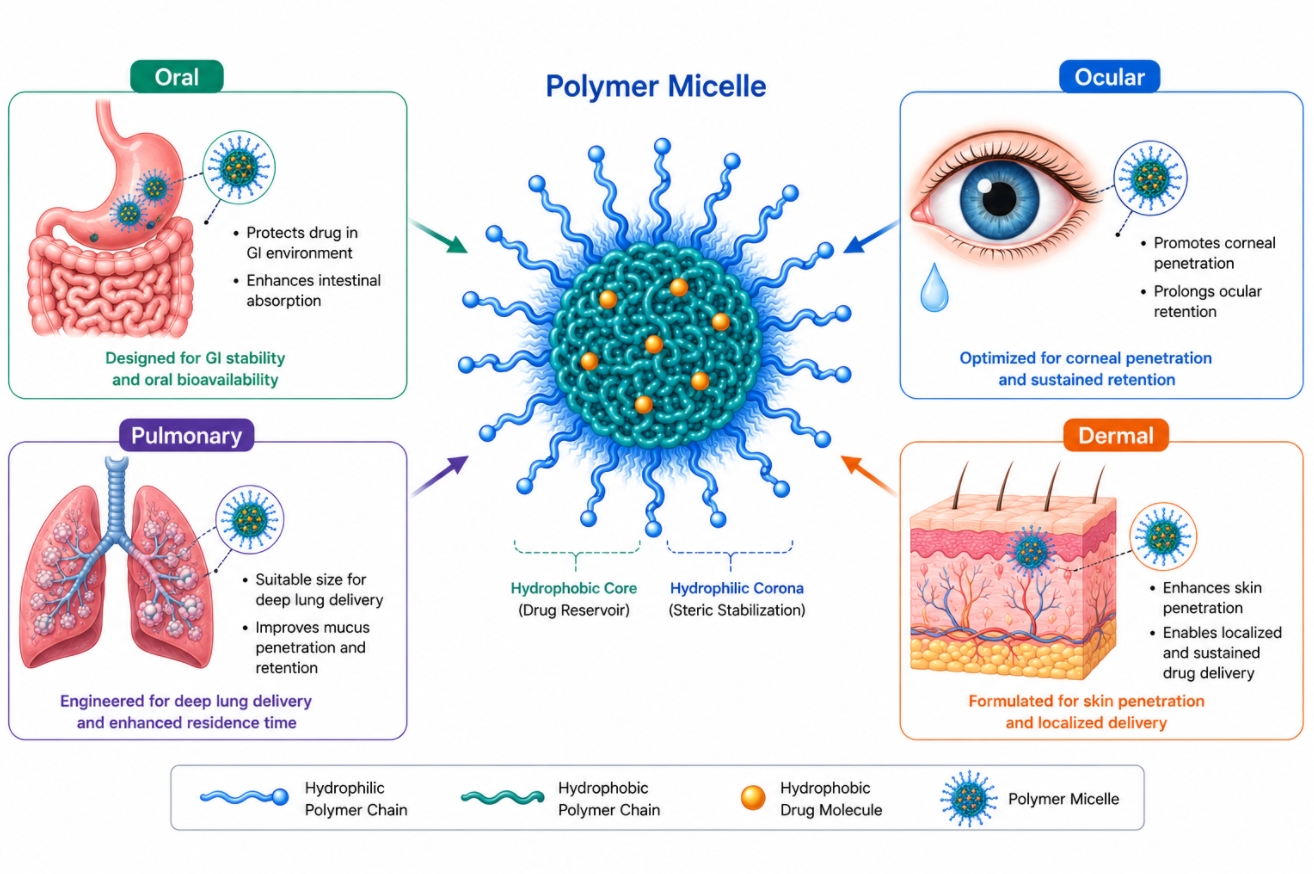 Fig. 1. Polymer micelles can be adapted for oral, ocular, pulmonary, and dermal delivery (BOC Sciences Authorized).
Core-Shell Function in Route-Specific Delivery
The core-shell structure is the common starting point across all four routes. The hydrophobic core can partition small molecules that are poorly compatible with aqueous media, while the hydrophilic corona helps maintain colloidal stability and influences interaction with local biological surfaces. Yet the same architecture can play very different roles depending on the route. In one setting, the core may mainly improve aqueous formulation of a hydrophobic molecule. In another, the corona may be more important because it determines local retention, mucus interaction, or surface hydration behavior. The micelle is therefore a shared structure with route-specific functions.
Shared Advantages Across Non-Invasive Routes
Across non-invasive delivery routes, polymer micelles often provide three broad advantages. First, they can improve the apparent dispersion of poorly water-compatible compounds. Second, they can create a controlled nanoscale environment that changes release and retention behavior. Third, they can be tuned through amphiphilic block copolymer design to adjust colloidal stability and interfacial properties. These shared benefits explain why micelles are repeatedly explored across multiple routes, even though their formulation logic still needs to be tailored for each local environment.
Why Route Conditions Change Micelle Behavior
Route conditions change micelle behavior because each route exposes the carrier to a different balance of dilution, surface turnover, fluid composition, barrier architecture, and contact time. A micelle that remains physically intact in one medium may destabilize or release its cargo differently in another. Surface chemistry that improves local interaction in one route may create excessive clearance or poor spreadability in another. These differences mean that route conditions do not simply influence performance at the margins. They reshape what counts as a useful polymer micelle in the first place.
Route Barriers That Shape Micelle Design
Before comparing formulation strategies, it is useful to define the barrier environment that each route presents. The delivery barrier determines whether the micelle needs to survive dilution, remain on a surface, distribute through mucus, or support local penetration. This route-first framework also prevents a common mistake: assuming that a micelle optimized for one biological interface can simply be transferred to another without redesign.
Gastrointestinal Barriers in Oral Delivery
Oral delivery challenges include variable pH, dilution during gastrointestinal transit, contact with bile salts and enzymes, and the need to maintain drug in a formulation-relevant state long enough to support dissolution or absorption. For polymer micelles, this means that colloidal stability and drug retention cannot be judged in water alone. A system that appears well formed at the bench may change rapidly once exposed to the dynamic and compositionally complex gastrointestinal environment.
Tear Clearance and Corneal Barriers in Ocular Delivery
Ocular formulations face rapid tear turnover, blinking-related clearance, limited residence time on the eye surface, and the layered barrier properties of corneal and surrounding tissues. In this route, retention and local surface behavior often matter as much as simple drug solubilization. A micelle must remain dispersed, tolerate the aqueous ophthalmic environment, and ideally prolong local contact without creating an unsuitable interface. These demands make ocular micelles more dependent on corona behavior and surface interaction than many oral systems.
Deposition and Mucus Barriers in Pulmonary Delivery
Pulmonary delivery adds a different set of questions: how the formulation is aerosolized or deposited, how it interacts with mucus and local fluids, how uniformly it distributes, and how long the active remains in a useful state after administration. Inhalation-related systems are especially sensitive to formulation robustness, because micelle behavior may change during aerosol generation, rehydration, dilution, or contact with the pulmonary surface. Local distribution and mobility matter alongside classical loading and stability considerations.
Stratum Corneum Constraints in Dermal Delivery
Dermal delivery is shaped by the skin barrier, especially the stratum corneum, along with the demands of topical spreadability, local residence, and partitioning into or across superficial layers. Micelles are often used here not because they automatically cross skin barriers, but because they can improve local formulation of difficult compounds and influence how actives are presented to the skin surface. Their role is therefore often one of controlled topical organization rather than guaranteed deep penetration.
| Delivery Route | Main Barrier | Why It Matters | What Micelles May Improve | Main Limitation |
|---|---|---|---|---|
| Oral | GI fluids, dilution, enzymatic and surfactant-rich environment | Micelles must remain useful through dynamic transit conditions | Drug dispersion and local formulation stability | Fast dilution and competing media interactions |
| Ocular | Tear clearance and limited surface residence | Short contact time reduces local formulation efficiency | Aqueous formulation and retention support | Rapid washout from the eye surface |
| Pulmonary | Deposition pattern and mucus interaction | Local distribution affects exposure strongly | Dispersed local delivery and controlled interface behavior | Aerosol and fluid stresses can change assembly state |
| Dermal | Stratum corneum and topical residence constraints | Barrier limits partitioning and depth of access | Topical solubilization and local delivery | Micelles do not automatically guarantee penetration |
Oral Delivery with Polymer Micelles
In oral systems, polymer micelles are most often valued for their ability to improve the formulation of poorly water-compatible compounds and help maintain a dispersed state in the gastrointestinal environment. Their usefulness depends on whether they preserve drug association long enough to support dissolution and absorption-related events under changing pH and fluid conditions. Oral micelles are therefore less about static particle identity and more about dynamic formulation behavior under transit-like stress.
Solubility and Dissolution Support
Many orally relevant compounds are limited by low aqueous compatibility, so micelles can be attractive because they provide a hydrophobic domain that improves apparent dispersion and reduces rapid precipitation. This is closely related to broader discussions of polymeric micelles for poorly soluble compounds. In oral formulation, however, the key question is not only whether the drug is initially dispersed, but whether the micellar state remains meaningful after dilution and contact with gastrointestinal components.
Stability in the Gastrointestinal Environment
Gastrointestinal stability involves more than pH resistance. Oral micelles encounter salts, bile components, enzymes, and constant dilution. These factors can alter corona behavior, compete with the micelle core for hydrophobic cargo, or shift the assembly equilibrium. A polymer system that looks stable in water may therefore be much less robust in a simulated or relevant gastrointestinal environment. Oral formulation design has to account for this early, because route success depends on how the carrier behaves in transit rather than at the moment of initial preparation.
Absorption and Mucosal Interaction
The role of mucosal interaction in oral micelles is complex. Too little interaction may reduce useful residence near absorptive surfaces, while too much interaction may hinder mobility or alter local distribution in ways that are not beneficial. Corona design, size, and surface chemistry therefore matter alongside core loading. In oral systems, the goal is usually not aggressive adhesion at any cost, but a balanced interaction profile that supports useful drug presentation without destabilizing the assembly prematurely.
Oral Release Control and Trade-Offs
Controlled release in oral micelles is often a balance between sufficient drug retention during transit and sufficiently accessible release once the carrier reaches a useful local environment. A core that is too weak may leak rapidly, while one that is too cohesive may delay drug release beyond the desired absorption window. Oral micelle design must therefore consider transit time, media effects, and route-specific release relevance rather than importing release assumptions from other delivery contexts.
Ocular Delivery with Polymer Micelles
Ocular delivery places different demands on polymer micelles because the formulation must work in a highly aqueous, quickly cleared environment with limited natural residence time. Here the value of the micelle often lies in making hydrophobic actives compatible with ophthalmic formulations while also helping the system remain on the surface long enough to matter. Local tolerance, clarity, and surface behavior are often as important as loading and release.
Aqueous Formulation for Hydrophobic Drugs
Ocular formulations frequently benefit from micelles because many relevant compounds are not naturally compatible with clear aqueous systems. A polymer micelle can create a nanoscale hydrophobic domain while preserving a water-dispersible external interface, allowing the formulation to remain more suitable for ocular application. This role is especially important when alternative solubilization approaches would require harsher cosolvents or less stable dispersed systems.
Surface Retention and Mucoadhesion
Retention on the ocular surface is one of the central design targets because tear turnover quickly removes applied formulations. Micelle surface chemistry can be tuned to improve local interaction with the surface environment, including hydration behavior and moderate mucoadhesive character. The challenge is to increase retention without producing an overly interactive or unstable interface. Ocular micelles therefore depend strongly on corona composition and surface-related formulation balance.
Corneal and Ocular Tissue Penetration
Penetration in ocular systems is not simply a question of making particles smaller. It also depends on local residence, the partitioning of the drug from the micelle, and the compatibility of the formulation with ocular surface barriers. A micelle may improve local drug presentation while still relying on release near the surface rather than intact carrier penetration as the main route to effective distribution. Interpreting ocular performance therefore requires separating carrier behavior from released-drug behavior whenever possible.
Ocular Stability and Local Release
Ocular micelles need to remain colloidally stable in a dilute aqueous environment while providing useful local release under short residence times. If the formulation releases too quickly, surface washout may dominate. If it releases too slowly, the micelle may be cleared before the drug becomes available. The release profile therefore has to be aligned with the short and dynamic exposure window of the eye rather than with the slower logic used in some other routes.
Pulmonary Delivery with Polymer Micelles
Pulmonary systems require polymer micelles to function under conditions shaped by aerosolization, deposition, local fluid contact, and mucus-associated distribution. In this route, the formulation challenge is not only to keep a poorly compatible active dispersed, but also to maintain a useful nanoscale state after administration and local rehydration. Pulmonary micelles are therefore especially sensitive to physical robustness and route-specific surface interaction.
Micelle Behavior in Inhalation Formulations
Inhalation-related formulation introduces stresses that do not appear in simple aqueous preparation. Drying, aerosol generation, or post-deposition reconstitution can alter the assembly state or redistribute the active compound. A pulmonary micelle therefore needs to be evaluated not only in its original liquid form, but also under the transformation pathway relevant to how the formulation is administered. This makes pathway-dependent assembly and reassembly particularly important in pulmonary systems.
Mucus Interaction and Local Distribution
Interaction with mucus and local fluid layers strongly shapes pulmonary distribution. A micelle that is too adhesive may remain localized in an unhelpful way, while one that is too noninteractive may distribute or clear too rapidly. Surface chemistry therefore needs to be tuned for the intended local behavior rather than treated as a generic stabilizing feature. In pulmonary design, local distribution often matters as much as initial deposition because it affects how much of the active remains meaningfully available at the interface.
Particle Deposition and Drug Exposure
Deposition determines where the formulation begins to act, but the exposure profile depends on what happens next. Once the micelle reaches the pulmonary environment, local dilution, fluid contact, and surface interactions may change retention and release. A formulation can therefore show suitable deposition characteristics while still failing to provide the intended drug exposure pattern. Pulmonary micelle evaluation has to connect deposition behavior with post-deposition colloidal performance rather than treating them as separate formulation stages.
Pulmonary Release and Formulation Limits
Release in pulmonary micelles must be interpreted against local residence and clearance. A micelle that releases the drug too rapidly may lose the benefits of organized nanoscale formulation, while one that releases too slowly may not match the practical exposure window of the lung environment. In some cases, more rigid or differently structured carriers may be preferable if long local persistence is the main goal. Pulmonary micelles are therefore best used when their dynamic assembly behavior supports, rather than contradicts, the intended local release pattern.
Dermal Delivery with Polymer Micelles
Dermal systems often use polymer micelles to improve topical formulation of hydrophobic actives, modulate local residence, and influence how the active is presented at the skin surface. Their role is usually more subtle than simply "crossing the skin barrier." For many dermal formulations, the important questions are spreadability, surface retention, local release, and controlled partitioning into superficial layers rather than deep carrier penetration as an intact particle.
Solubilization in Topical Systems
Topical formulations frequently encounter hydrophobic actives that are difficult to disperse in skin-compatible vehicles. Polymer micelles can help by creating a nanoscale hydrophobic domain within a more easily handled aqueous or semi-aqueous system. This may improve homogeneity and reduce uncontrolled crystallization or phase separation in the final product. Their value in dermal systems therefore often begins with formulation elegance and consistency, not only with penetration claims.
Skin Surface Retention
Retention on the skin surface matters because local performance often depends on how long the active remains available within the topical film or superficial contact zone. Micelle surface properties and the surrounding vehicle can affect whether the formulation remains evenly distributed or redistributes in a less useful way after application. Good dermal micelle design therefore considers not only particle behavior but also how the micelles behave inside the overall topical system.
Penetration Through the Skin Barrier
Skin penetration is often discussed as if it were a direct particle-transport question, but in many micelle systems the relevant process may instead involve local release and subsequent partitioning of the active into the skin barrier. The micelle can still be valuable by presenting the drug in a form that improves local availability at the surface. This distinction is important because it prevents overclaiming what the carrier itself is necessarily doing and keeps formulation logic anchored in barrier reality.
Dermal Release and Local Performance
Dermal release needs to balance retention in the topical system with sufficiently available drug at the skin interface. A micelle that holds the active too strongly may reduce useful partitioning into the outer barrier, while one that releases too rapidly may lose the benefits of controlled formulation. The ideal release pattern depends on whether the formulation is meant to act mainly at the surface or within more superficial skin layers. Dermal micelles therefore need route-specific release design rather than a generic slow-release assumption.
Need Route-Specific Polymer Micelle Formulation Support?
BOC Sciences supports amphiphilic polymer design, polymer micelle preparation, and characterization workflows for oral, ocular, pulmonary, and dermal delivery systems.
How Polymer Micelle Design Changes by Delivery Route?
Once the route differences are clear, the design question becomes more specific: which micelle variables should actually change when the route changes? The answer usually involves size, surface chemistry, core composition, residence-time strategy, and the behavior of the formulation medium itself. These variables often interact, which means route-specific optimization must be deliberate rather than piecemeal.
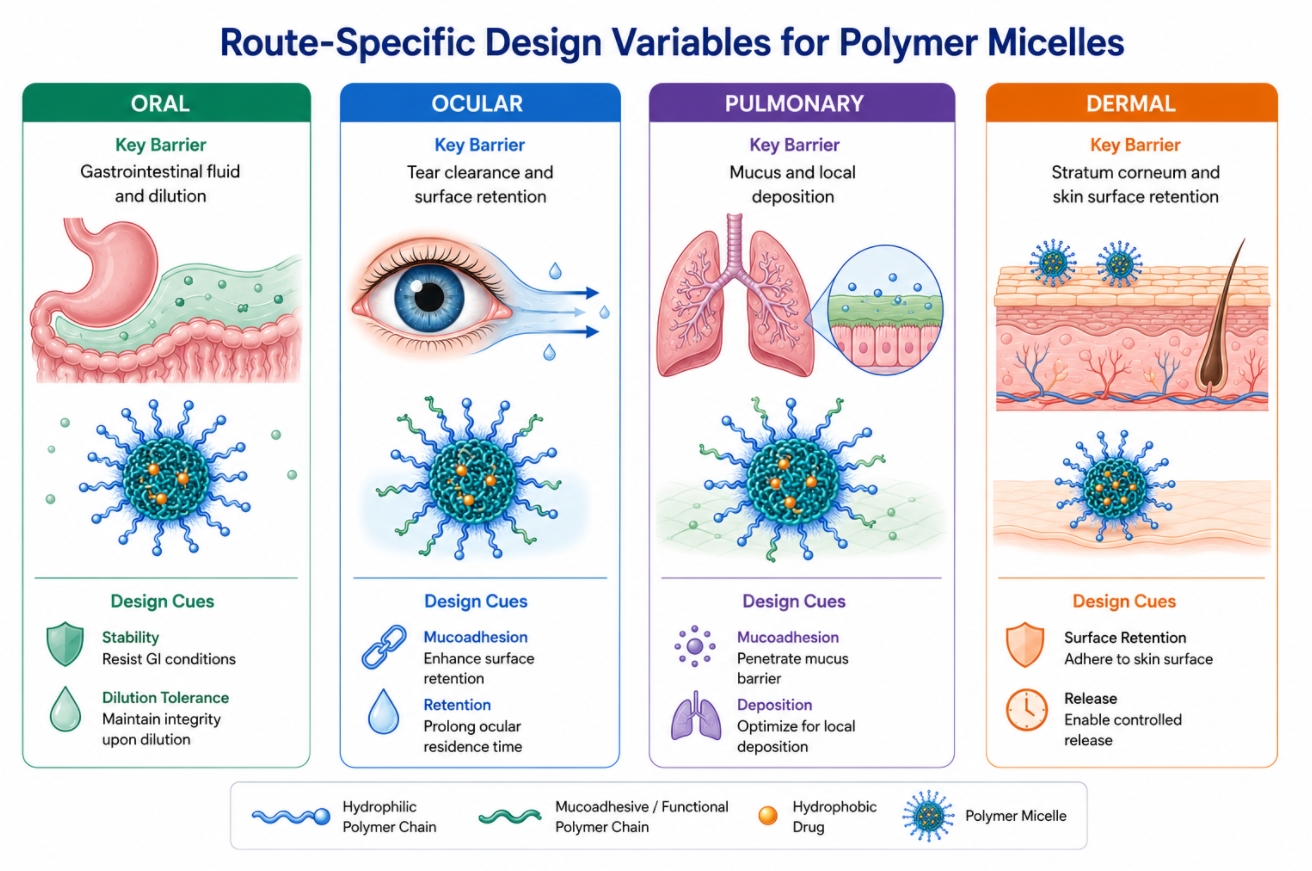 Fig. 2. Route-specific barriers determine how polymer micelles should be designed (BOC Sciences Authorized).
Size and Colloidal Stability
Size affects distribution, apparent clarity, interfacial behavior, and the likelihood that the micelle remains in a useful colloidal state after administration. But size alone is not enough. A route-appropriate micelle must also remain stable in the relevant medium, whether that is a gastrointestinal fluid, tear-like environment, pulmonary fluid interface, or topical matrix. Route-specific size selection therefore always has to be paired with route-specific stability testing.
Surface Chemistry and Mucoadhesion
Surface chemistry determines hydration, protein interaction, mucus behavior, and local surface residence. Mild mucoadhesion may be useful in ocular or some oral contexts, while more mobile surface behavior may be advantageous in pulmonary systems depending on the desired distribution pattern. In dermal formulations, the surface may need to support compatibility with the topical vehicle more than strong biological adhesion. Corona design is therefore one of the most route-sensitive parts of polymer micelle formulation.
Core Composition and Drug Compatibility
Core composition should always be matched to the active compound, but the route changes what "matched" means in practice. In some cases, a highly retentive core is beneficial because local dilution is severe. In others, a more mobile core may be preferable because faster local release is needed. This is why the same hydrophobic active may require different micelle core logic depending on whether the target route is oral, ocular, pulmonary, or dermal. Discussions of small-molecule polymer formulation design are especially relevant here.
Release Pattern and Residence Time
Every route imposes a different time window in which the micelle can remain useful. Ocular systems have short surface contact times, oral systems face moving gastrointestinal transit, pulmonary systems depend on local deposition and clearance, and dermal systems may benefit from longer surface presence. The release pattern must therefore be paired with route-specific residence time rather than optimized in the abstract. A good route-specific micelle is one whose release behavior fits the local exposure window.
Route-Specific Excipient and Medium Effects
Excipients and local medium composition can alter micelle behavior significantly. Vehicle composition, salt content, local macromolecules, and processing history may all reshape stability and drug partitioning. A micelle that works well in one vehicle may fail in another simply because the surrounding formulation context changes its assembly. Route-specific design therefore includes the medium and excipient environment, not only the isolated polymer and active compound.
How to Evaluate Micelles by Delivery Route?
Route-specific evaluation is essential because the same micelle can give very different performance profiles depending on what question is being asked. General characterization still matters, but oral, ocular, pulmonary, and dermal systems each add their own performance priorities. Evaluation should therefore combine shared structural metrics with route-specific functional tests that reflect the actual barrier and residence conditions of use.
Shared Characterization Metrics
Across all routes, the initial evaluation set usually includes size, PDI, morphology, loading, retention, and some form of release or persistence assessment. These metrics establish whether the micelle exists as a coherent colloidal system and whether the active remains meaningfully associated. Shared characterization matters because route-specific claims are weak if the basic assembly state is unstable or poorly defined from the beginning.
Oral Evaluation Focus
Oral evaluation should prioritize behavior under dilution, stability in simulated or relevant gastrointestinal media, and whether the active remains associated long enough to support useful dissolution or absorption-related presentation. A route-relevant oral study therefore looks beyond simple water-based particle measurements and asks how the micelle responds to transit-like chemical conditions and concentration changes.
Ocular and Pulmonary Evaluation Focus
Ocular systems should be evaluated for clarity, local retention, compatibility with aqueous administration, and release behavior under short residence conditions. Pulmonary systems need evaluation of formulation robustness during administration, local redistribution, and micelle behavior after deposition and fluid contact. Although both routes involve aqueous interfaces, their performance questions are not the same and should not be merged into one generic "mucosal" test strategy.
Dermal Evaluation Focus
Dermal evaluation should ask whether the micelle remains useful within the topical system, whether the active remains well distributed, and whether release supports the intended local skin interface behavior. Surface retention, formulation homogeneity, and barrier-facing release logic are often more informative than trying to prove intact-particle transport alone. Route-appropriate dermal evaluation therefore keeps the topical context central rather than treating the micelle as an isolated suspension.
| Route | Key Evaluation Question | Representative Readout | Why It Matters | Common Interpretation Risk |
|---|---|---|---|---|
| Oral | Does the micelle remain useful through GI-like conditions? | Dilution and media stability, retention behavior | Transit conditions can quickly alter assembly | Water-only tests overstate practical stability |
| Ocular | Does the formulation remain clear and locally retained? | Surface residence and local release behavior | Short residence time dominates performance | Initial loading is mistaken for useful ocular exposure |
| Pulmonary | Does the micelle survive administration and local redistribution? | Post-deposition colloidal behavior and release | Formulation stress continues after delivery | Deposition is treated as equivalent to effective exposure |
| Dermal | Does the micelle improve topical performance at the skin interface? | Surface retention, homogeneity, local release | Topical effectiveness depends on formulation context | Penetration is overclaimed without route-relevant evidence |
Route-Specific Trade-Offs in Polymer Micelle Delivery
A technically credible route-comparison page must explain not only where polymer micelles fit, but also where they reach their limits. Route-specific barriers can make micelles highly useful in one formulation setting and less attractive in another. The right decision is therefore not whether micelles are generally good, but whether their dynamic core-shell structure matches the problem better than alternative carrier types.
When Micelles Are a Strong Fit
Polymer micelles are a strong fit when the main problem involves poor aqueous compatibility, a need for nanoscale dispersed formulation, or route-specific local release from a relatively soft and adaptable carrier. They are especially attractive when core-shell organization improves the formulation without requiring a rigid particle matrix. This is why micelles are often considered early in non-invasive route design when solubilization and local barrier adaptation are both needed.
When Micelles Reach Their Limits
Micelles reach their limits when the route demands stronger long-term structural persistence, when dilution or medium interaction overwhelms the assembly, or when the active is too poorly retained by a dynamic hydrophobic core. In those cases, the platform may still be scientifically interesting but practically weak. Recognizing those limits early prevents the formulation from being evaluated against unrealistic expectations.
Route-Specific Trade-Offs
Each route introduces a different trade-off. Oral systems balance dispersion against gastrointestinal robustness. Ocular systems balance retention against clarity and comfort-sensitive surface behavior. Pulmonary systems balance local distribution against administration-related instability. Dermal systems balance topical retention against useful release into or across superficial skin layers. These trade-offs explain why route-specific micelle design should not be reduced to one universal formulation template.
When Another Carrier May Work Better
Another carrier may be more suitable when the formulation problem depends on denser entrapment, greater matrix rigidity, or a release mechanism that self-assembled micelles do not support well. In those situations, broader comparisons such as micelles versus other polymer carriers can help clarify whether the route-specific objective truly aligns with a micellar system.
Route-Specific Micelle Formulation Support at BOC Sciences
At BOC Sciences, we support route-specific polymer micelle development by aligning amphiphilic polymer design with the barrier logic of oral, ocular, pulmonary, and dermal systems. For this topic, the most important question is not simply whether a micelle can be formed, but whether it remains useful within the route environment it is intended for. Our support therefore focuses on route-aware polymer selection, formulation optimization, surface and stability tuning, and evaluation workflows that connect micelle structure to actual delivery-pathway performance.

Polymer Design for Route-Specific Micelles
- Design of amphiphilic polymers for oral, ocular, pulmonary, and dermal formulation needs.
- Selection of hydrophilic and hydrophobic segments according to route barriers and local media conditions.
- Custom development through polymer synthesis services.
- Support for matching polymer architecture to route-specific stability and release goals.
Formulation Support for Four Delivery Routes
- Optimization of polymer micelle preparation for oral, ocular, pulmonary, and dermal systems.
- Adjustment of formulation conditions to improve local compatibility and route-relevant performance.
- Route-specific refinement through polymer modification support.
- Practical guidance on when to adapt a micelle and when to reconsider the carrier choice.
Stability and Release Evaluation Services
- Comparative evaluation of route-specific dilution, residence, and release behavior.
- Analytical support for linking micelle structure with local performance questions.
- Integrated workflows through polymer characterization services.
- Assessment strategies tailored to non-invasive delivery environments rather than generic bench conditions.
Material Selection for Non-Invasive Delivery
- Selection of materials suited to local retention, aqueous stability, and route-dependent release behavior.
- Comparison of candidate polymer systems for specific administration pathways.
- Support for morphology-focused assessment through polymer structure morphology analysis.
- Development guidance built around realistic route-specific formulation constraints.
Do You Need A Consultation?
BOC Sciences provides tailored support for route-specific polymer micelle design, formulation optimization, and stability-focused evaluation across non-invasive delivery systems.
Unlock New Possibilities with Tailored and High-Performance Polymers
| Cat. No. | Product Name | CAS No. | Inquiry |
|---|---|---|---|
| 30551-89-4 | Poly(allylamine) solution | 30551-89-4 | Bulk Inquiry |
| 9016-06-2 | POLY(2-VINYLPYRIDINE N-OXIDE) | 9016-06-2 | Bulk Inquiry |
| 25014-15-7 | Poly(2-vinylpyridine) | 25014-15-7 | Bulk Inquiry |
| 25232-41-1 | Poly(4-vinylpyridine), linear | 25232-41-1 | Bulk Inquiry |
| 9050-06-0 | Poly(vinyl cinnamate) | 9050-06-0 | Bulk Inquiry |
| 25213-24-5 | Poly(vinyl alcohol), 88% hydrolyzed | 25213-24-5 | Bulk Inquiry |
| 68441-17-8 | Polyethylene, oxidized | 68441-17-8 | Bulk Inquiry |
| 9002-83-9 | poly(chlorotrifluoroethylene) | 9002-83-9 | Bulk Inquiry |
| 64754-90-1 | Polyethylene, chlorinated | 64754-90-1 | Bulk Inquiry |
| 27964-99-4 | Poly-D-lysine hydrobromide | 27964-99-4 | Bulk Inquiry |
Frequently Asked Questions
-
Why do polymer micelles need different designs for oral, ocular, pulmonary, and dermal delivery?
Different delivery routes expose polymer micelles to different fluids, barriers, clearance mechanisms, and residence-time constraints. Oral systems face gastrointestinal stress and dilution, ocular systems face rapid tear clearance, pulmonary systems require suitable deposition and local redistribution, and dermal systems depend on skin-surface behavior. These differences change what micelle design must prioritize in practice.
-
Are polymer micelles mainly useful for hydrophobic drugs in these routes?
Hydrophobic compounds are among the most common reasons to use polymer micelles because the micelle core can improve dispersion and formulation stability in aqueous or semi-aqueous systems. However, the route-specific value of micelles also depends on local retention, release behavior, and surface interaction, not only on improving apparent solubility of the active ingredient.
-
What makes ocular micelle formulations different from oral ones?
Ocular micelles are strongly shaped by tear clearance, short surface residence, and the need for clear, well-tolerated aqueous formulations. Oral micelles, by contrast, are mainly challenged by gastrointestinal dilution, changing pH, and media complexity during transit. As a result, ocular systems emphasize surface retention and local release, while oral systems emphasize stability during passage.
-
How do pulmonary micelles differ from dermal micelles in formulation needs?
Pulmonary micelles must remain useful through administration-related stress, deposition, and local fluid interaction in the lung environment. Dermal micelles are more strongly influenced by topical vehicle behavior, skin-surface retention, and barrier-facing release. Pulmonary systems depend on post-deposition colloidal performance, whereas dermal systems often depend on how the micelle behaves within the applied formulation matrix.
-
Which evaluation parameters matter most across different routes?
All routes require basic characterization such as size, loading, retention, and release, but each route adds its own priority. Oral systems need media and dilution stability, ocular systems need residence and local compatibility, pulmonary systems need post-administration robustness, and dermal systems need topical retention and barrier-facing release. Shared metrics alone are rarely sufficient for route-specific judgment.
-
When should another carrier be chosen instead of a polymer micelle?
Another carrier may be preferable when the route requires stronger structural persistence, denser matrix entrapment, or a release mechanism that a dynamic self-assembled micelle cannot support well. If local media rapidly destabilize the micelle or if the active is poorly retained in the core, another carrier platform may offer better route-specific performance.