
How Block Copolymer Architecture Controls Polymer Micelle Assembly?
Block copolymer design sits at the center of polymer micelles development because the assembled structure is never independent from the molecular architecture that produces it. In selective solvents, amphiphilic block copolymers organize into nanoscale aggregates only when the balance between solvophilic and solvophobic segments, chain connectivity, topology, and intermolecular interactions favors assembly over molecular dispersion. This means polymer micelles are not generic carriers generated by any amphiphilic chain. Their size, morphology, stability, internal packing, and functional behavior are all consequences of design choices made at the block copolymer level. For researchers working with self-assembled nanostructures, the relevant question is therefore not only whether a polymer can form micelles, but how architecture controls what kind of micelles form, how persistent they remain, and how reliably they support a target formulation or materials task. Researchers developing amphiphilic polymer systems may find Polymer Micelles: A Guide to Design, Assembly, and Applications useful for understanding how molecular design influences micelle assembly, stability, and downstream applications.
What Is Block Copolymer in Polymer Micelles?
In polymer micelle systems, block copolymer design refers to the deliberate control of segment identity, block ratio, molecular weight, sequence arrangement, and topology to regulate self-assembly in selective media. The micelle is therefore the structural consequence of molecular design, not a separate formulation phenomenon that can be optimized independently. This is why rational micelle development begins with an understanding of how amphiphilic architecture generates packing preference, interfacial curvature, and nanoscale organization before any discussion of loading or application performance.
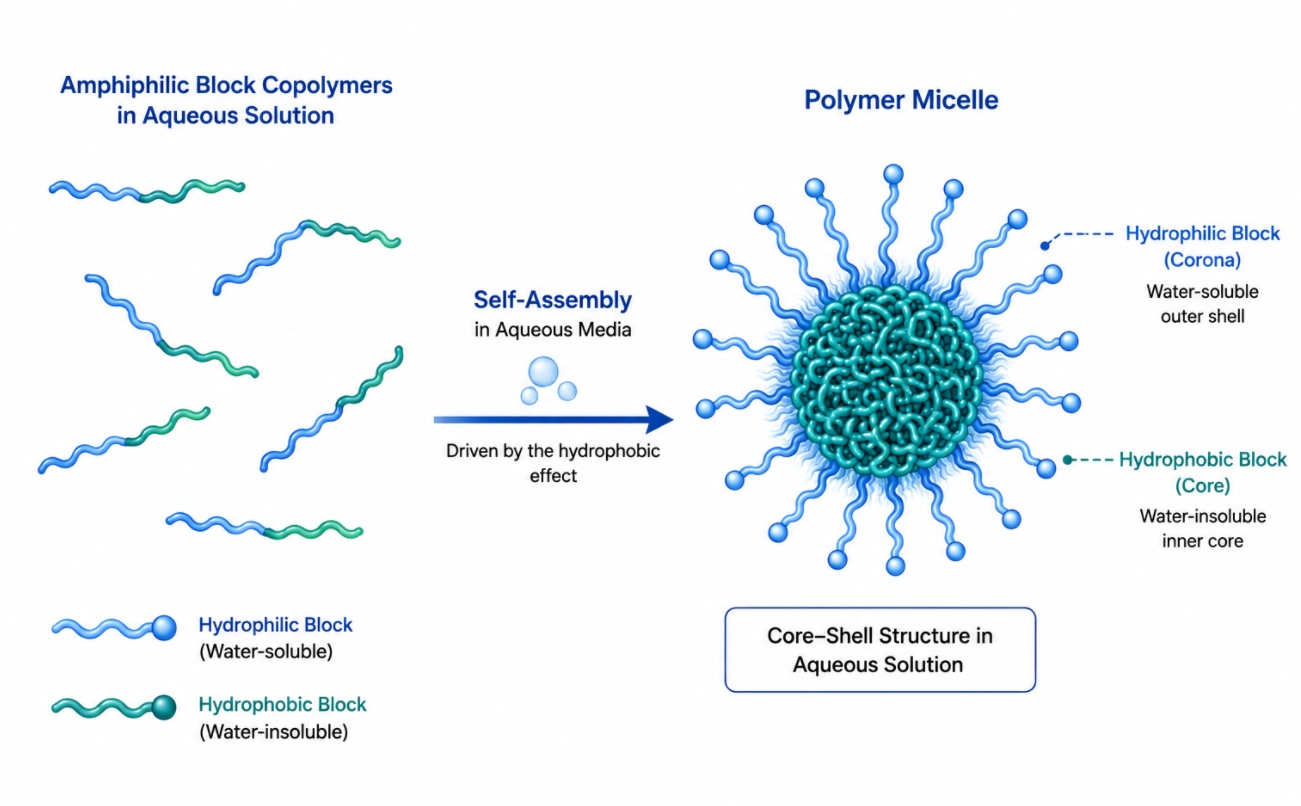 Fig. 1. Block copolymer architecture guides polymer micelle self-assembly behavior (BOC Sciences Authorized).
Amphiphilic block copolymers form polymer micelles because one segment is more compatible with the solvent while another is less compatible. In water, the solvophobic block tends to minimize contact with the continuous phase and condenses into a core-like domain, while the solvophilic block extends outward to stabilize the interface. This produces the core-shell organization typical of polymer micelle platforms. The resulting structure is governed by free-energy reduction, but the exact outcome depends on how the polymer chain distributes incompatibility, flexibility, and interfacial constraints across the molecule.
Why Polymer Architecture Matters Beyond Simple Amphiphilicity
Amphiphilicity alone does not explain why one copolymer forms small spherical micelles while another forms elongated aggregates or more complex morphologies. The architecture controls how the chain folds, how densely the core can pack, how much stretching the corona can tolerate, and whether the interface can support a given curvature. Two polymers with similar overall polarity balance may still assemble very differently if they differ in block length distribution, connectivity, or rigidity. This is why architecture is not a secondary refinement but a primary determinant of micelle behavior.
Block Copolymer Design vs General Polymer Material Selection
General polymer selection focuses on choosing a material class with useful bulk or chemical properties. Block copolymer design, by contrast, asks how the arrangement of segments inside a single macromolecule controls self-assembly under specific conditions. A formulation may use familiar copolymer building blocks, yet still fail to produce useful micelles if the architecture does not support the desired curvature, stability, or packing. The design problem is therefore not only what chemistry is present, but how that chemistry is distributed along or around the chain.
Why Assembly Control Starts at the Molecular Design Stage
Once a block copolymer enters a selective solvent, many of the most important assembly outcomes are already encoded in the chain structure. Solvent conditions and preparation route influence kinetics and pathway selection, but the molecular architecture defines the available packing solutions. If the hydrophobic block is too short, the core may be too weak to sustain a persistent micelle. If the hydrophilic block is too dominant, the system may prefer smaller or more weakly associated aggregates. Assembly control therefore begins long before the first micelle forms and is rooted in the design stage itself.
Which Structural Features of Block Copolymers Control Micelle Assembly?
Micelle assembly is governed by multiple interacting structural variables rather than a single design parameter. Hydrophilic-hydrophobic balance sets the overall drive for segregation, but chain length, topology, block identity, interblock contrast, and local noncovalent interactions all determine how that drive is expressed. Because these variables act together, relatively small structural changes can redirect the assembly pathway and lead to a different micelle population or even a different aggregate class altogether.
Hydrophilic-Hydrophobic Balance and Packing Preference
The balance between the solvophilic and solvophobic blocks is one of the strongest controls on assembly because it sets the preferred interfacial curvature. When the hydrophilic block is relatively large, the system often favors assemblies with higher curvature and smaller core domains. When the hydrophobic block becomes more dominant, the drive toward reduced interface area increases and lower-curvature structures may become accessible. This balance is therefore a practical way to tune whether the polymer prefers discrete small micelles or transitions toward larger and less highly curved aggregates.
Block Ratio and the Tendency Toward Different Aggregate Shapes
Block ratio influences not only whether assembly occurs but also what morphology becomes favorable. A relatively large corona-forming block can stabilize spherical structures by supporting strong interfacial hydration and steric repulsion. A larger core-forming block can reduce curvature tolerance and increase the likelihood of worm-like or vesicle-like structures. In this sense, block ratio acts as a geometrical control parameter that influences how chains share volume between core and corona and how much stretching each domain can accommodate.
Molecular Weight and Chain Length Effects
Molecular weight affects assembly because longer chains alter both segmental crowding and the entropic cost of confinement. Increasing block length can strengthen segregation and produce more cohesive cores, but it can also slow equilibration and make nonequilibrium structures more common. At the same time, longer hydrophilic blocks change corona thickness and interparticle repulsion. This means molecular weight is not only a size variable. It changes the whole balance of chain packing, micelle persistence, and access to alternative morphologies.
Segment Chemistry, Rigidity, and Intermolecular Interaction
Segment chemistry determines how chains interact once they begin to assemble. Flexible amorphous blocks can form relatively soft cores that reorganize readily, while more rigid or interacting segments may produce denser cores with stronger internal cohesion. Hydrogen bonding, aromatic association, dipolar interactions, and side-chain bulk all influence how the core orders and how readily the interface can adapt. These chemical details often explain why two polymers with similar nominal hydrophobicity still produce different micelle sizes, shapes, or stability profiles.
How Different Copolymer Architectures Change Polymer Micelle Behavior?
Architecture affects polymer micelles not only through composition, but also through the number and arrangement of blocks around the chain. Diblock, triblock, grafted, star-shaped, and dendritic systems distribute solvophilic and solvophobic segments differently, which changes how chains fold, bridge, cluster, or pack during assembly. The result is that topology influences more than size. It changes the internal logic of the micelle itself.
Diblock Copolymers and Classical Core-Shell Micelles
Diblock copolymers are the most straightforward architecture for classical polymer micelles because they separate one solvophilic and one solvophobic domain in a way that naturally supports core-shell assembly. Their relatively simple topology often makes them easier to interpret in terms of size, morphology, and critical micelle concentration (CMC). This simplicity is one reason they remain central in discussions of polymeric micelles versus conventional micelles, where low CMC and more persistent self-assembly are important comparative themes.
Triblock Copolymers and Bridging or Segmented Assembly Effects
Triblock copolymers introduce new assembly possibilities because the third segment can alter chain conformation and interaggregate interactions. In some systems, triblock sequences can encourage bridging, segmented core organization, or asymmetry in corona distribution. ABA and ABC-type sequences do not behave identically, and the position of the central block matters. A triblock may therefore produce a micelle that looks superficially similar to a diblock-derived one while differing significantly in internal packing, interfacial structure, or kinetic persistence.
Graft, Comb, and Hyperbranched Architectures
Graft and comb-like block copolymers distribute functional segments along a backbone or branch-like framework, which changes how local crowding and segment accessibility develop during self-assembly. These architectures can generate more heterogeneous interfaces or broaden the range of accessible packing arrangements compared with strictly linear chains. Hyperbranched systems similarly increase architectural complexity and can produce micelles whose corona density, internal free volume, or guest interaction profile differ substantially from those of linear analogues. Their design value lies in that tunability, but interpretation becomes correspondingly more demanding.
Star-Shaped and Dendritic Architectures for Unimolecular or Specialized Micelles
Star-shaped and dendritic architectures offer a route to more compact, highly organized self-assembled structures and, in some cases, to unimolecular or near-unimolecular micelle-like systems. Because multiple arms radiate from a central core, the chain distribution and local density can differ strongly from those in linear block copolymers. This may enhance compactness, alter corona presentation, or stabilize specialized nanostructures. At the same time, these architectures can be harder to synthesize reproducibly and more difficult to analyze through standard micelle characterization alone.
Why Topology Changes More Than Just Size
Topology alters how a polymer chain uses space. It changes the way the solvophobic domain can condense, how much conformational freedom the solvophilic block has, and whether multiple segments can cooperate or compete during assembly. As a result, topology influences morphology, internal organization, chain exchange, and even the accessibility of nonequilibrium states. This is why architecture comparisons should focus on full assembly behavior rather than on a single output such as particle diameter.
| Architecture Type | Main Structural Feature | Typical Assembly Tendency | Main Strength | Main Limitation |
|---|---|---|---|---|
| Diblock | One solvophilic block and one solvophobic block | Classical core-shell micelles | Clear structure-property interpretation | Less architectural flexibility |
| Triblock | Three connected segments with sequence dependence | Bridged, segmented, or modified micellar organization | More tunable interfacial and packing behavior | Greater structural complexity |
| Graft/Comb/Hyperbranched | Side-chain or branched segment distribution | More complex interfacial and packing states | High tunability of corona and core environment | Harder to characterize cleanly |
| Star/Dendritic | Multiple arms from a central branching point | Compact specialized micellar or unimolecular-like structures | High local functionality and architectural control | Synthesis and interpretation can be demanding |
How Polymer Architecture Controls Micelle Morphology?
Polymer architecture does not merely determine whether micelles form. It also influences which morphology becomes most accessible or most persistent. Spherical micelles are only one of many possible outcomes. As the chain architecture changes, the system may favor elongated aggregates, vesicles, crystalline-core micelles, or other higher-order morphologies. Understanding these transitions is essential because morphology strongly affects colloidal behavior, loading profile, and functional performance.
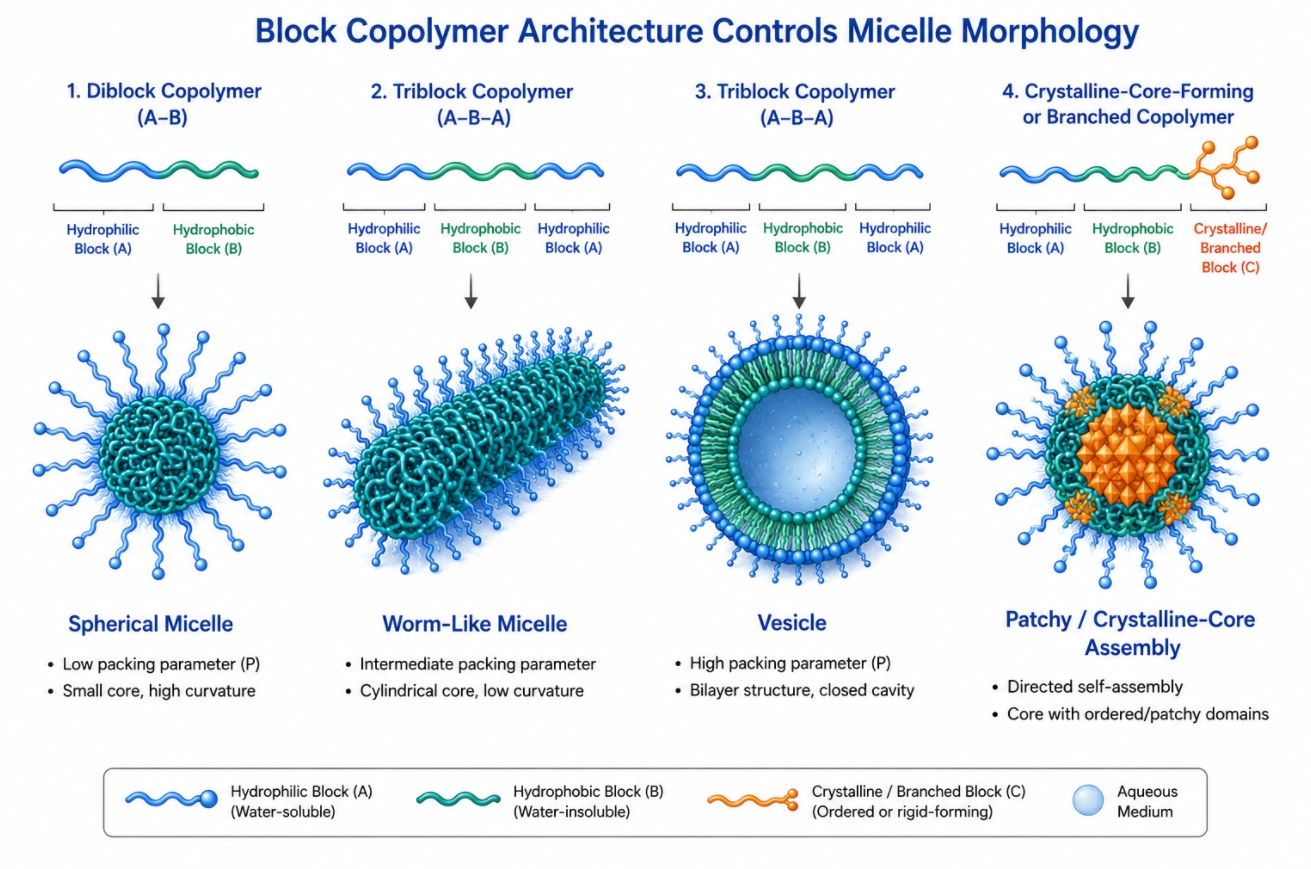 Fig. 2. Polymer architecture influences micelle morphology and assembly outcome (BOC Sciences Authorized).
Why Some Block Copolymers Form Spherical Micelles
Spherical micelles are favored when the architecture supports relatively high interfacial curvature and when the corona can stabilize small aggregates efficiently. This often happens when the solvophilic block is sufficiently large relative to the core-forming block and when the core remains amorphous or flexible enough to tolerate the required packing. Spherical micelles are common because they represent an efficient compromise between core condensation and corona stretching in many aqueous block copolymer systems.
Cylindrical, Worm-Like, and Elongated Assemblies
As the packing preference shifts toward lower curvature, the same amphiphilic system may begin to favor cylindrical or worm-like structures. This can occur when the core-forming block becomes longer, more cohesive, or more ordered, or when the corona can no longer easily support the high curvature of a sphere. Elongated structures often show different rheological and stability characteristics than spherical ones, and they also respond differently to dilution and cargo incorporation. Their appearance is therefore a major indicator that the architectural balance has shifted.
Vesicles, Polymersomes, and Higher-Order Transitions
Further reduction in preferred curvature can produce bilayered structures such as vesicles or polymersomes, where the block copolymer organizes into a shell enclosing an internal aqueous compartment. These structures require a different packing balance from classical micelles and reflect a distinct architectural regime. They are important to recognize because they behave differently in loading, release, and structural persistence. A polymer system intended to form micelles may transition toward vesicular structures if block ratio or solvent pathway is not controlled carefully.
Crystallization-Driven Self-Assembly and Patchy Micelles
When the core-forming block is crystallizable, morphology can be shaped not just by general amphiphilicity but also by crystallization-driven self-assembly. In these systems, core ordering can impose directional growth and promote cylindrical or segmented morphologies that differ from those expected for fully amorphous micelles. Patchy or compartmentalized structures can also emerge when architectural complexity and segment incompatibility become high enough to create multiple local packing domains. These outcomes demonstrate that polymer architecture controls morphology through both thermodynamic curvature balance and more specific ordering phenomena.
How Block Copolymer Design Influences Stability, CMC, and Persistence?
For many researchers, assembly control matters because it ultimately affects practical micelle behavior: how readily the micelle forms, how low the critical micelle concentration becomes, how resistant the structure is to dilution, and how persistent it remains once formed. These are not independent outputs. They all reflect how architecture shapes core cohesion, corona stabilization, and the balance between equilibrium preference and kinetic trapping.
Core Cohesion and Critical Micelle Concentration
Stronger core-forming segments usually lower the tendency of chains to remain dispersed as unimers and often reduce the concentration needed for assembly. This can shift the system toward lower CMC and greater assembly persistence. However, stronger cohesion is not free of consequences. It may also increase sensitivity to packing frustration or slow internal equilibration. The relationship between architecture and CMC should therefore be understood as part of a wider self-assembly balance rather than as a simple "more hydrophobic is always better" rule.
Corona Design and Colloidal Stability
The corona-forming block is critical for colloidal stability because it determines hydration, steric repulsion, and interparticle interaction. Hydrophilic segments derived from PEG-related materials are widely used because they provide reliable aqueous compatibility and interfacial stabilization. Yet corona design can also affect how compactly the core forms and how much dynamic rearrangement the micelle tolerates. A highly stabilizing corona may preserve dispersion but at the same time alter packing conditions enough to shift morphology or limit responsiveness.
Thermodynamic Stability vs Kinetic Persistence
Architecture influences whether a micelle is favored at equilibrium and how quickly it reorganizes once formed. Some structures are relatively stable thermodynamically, while others persist mainly because chain exchange and restructuring are slow. Longer hydrophobic blocks, crystallizable domains, or more complex topologies may increase kinetic persistence substantially. This can be advantageous when structural retention is needed, but it also means the observed micelle state may reflect pathway dependence as much as equilibrium preference.
Why Architecture Can Improve Stability but Reduce Responsiveness
The same design features that strengthen assembly may also reduce the ability of the micelle to respond when environmental change or cargo release is desired. A dense or ordered core can resist dilution effectively, yet it may also slow release, hinder dynamic rearrangement, or reduce sensitivity to stimuli. This trade-off is especially important when comparing standard self-assembled carriers with stimuli-responsive polymer micelles, where controlled change is part of the design goal rather than a defect to be minimized.
How Block Copolymer Design Affects Cargo Loading and Functional Performance?
Block copolymer architecture shapes more than assembly and stability. It also influences what kinds of guests the micelle can host, how much can be loaded, how uniformly the guest is distributed, and how easily it escapes or remains retained. In many functional systems, cargo behavior is inseparable from architecture because the core environment, corona accessibility, and interfacial properties all originate from the molecular design of the polymer.
Core Chemistry and Guest Compatibility
A micelle can only load a guest effectively if the core offers a compatible microenvironment. The relevant factors include polarity, flexibility, hydrogen-bonding potential, aromaticity, and local free volume. A core-forming block based on polyester chemistry may behave differently from a more rigid aromatic or ionic segment, even when both are broadly hydrophobic. Guest compatibility therefore depends on the actual chemistry of the core, not only on whether the polymer can be categorized as amphiphilic.
How Block Structure Influences Loading Capacity and Retention
A larger or more cohesive core may increase available loading space for some guests, but it can also reduce mobility and make loading kinetically more difficult. A softer core can sometimes admit guests more readily while retaining them less effectively afterward. Loading capacity and long-term retention therefore do not always improve in parallel. Architecture determines how the guest partitions into the core, how much rearrangement follows loading, and how stable the final guest-containing assembly remains under later conditions.
Functional Corona Design for Interfacial Control
The corona is often treated as a passive stabilizing layer, but architecture can make it an active functional region. Through composition and segment placement, the corona can be designed to alter hydration, reduce aggregation, present functional groups, or influence interfacial interactions. This is particularly important when the micelle must communicate with the surrounding environment rather than simply isolate a core-loaded guest. Functional corona design therefore adds another layer of architectural control that affects not only colloidal behavior but also overall micelle utility.
Architecture Considerations for Responsive or Targeted Micelle Systems
Responsive or targeted micelles often require architecture that supports a trigger-sensitive domain, a stabilizing shell, and a functional interface without losing structural interpretability. That usually means balancing multiple design roles within one polymer system. Some projects eventually show that a simpler architecture performs more reliably than a more heavily engineered one. This is especially evident when researchers compare block-copolymer micelles with broader approaches in polymer materials for advanced delivery systems, where added functionality does not always translate into better overall performance.
Need Custom Block Copolymers for Polymer Micelle Design?
BOC Sciences supports amphiphilic polymer design, architecture optimization, micelle synthesis, and characterization workflows for advanced polymer micelle development.
How to Characterize Architecture-Dependent Micelle Assembly?
Architecture-dependent assembly cannot be judged by a single measurement. The same polymer system may show an acceptable nanoscale size while still containing mixed morphologies, hidden internal ordering, or pathway-dependent structures that only become evident under deeper analysis. Proper characterization must therefore combine basic colloidal measurements with direct morphology and internal structure tools. Only then can architecture-property relationships be interpreted with confidence.
Size, PDI, and CMC as Initial Assembly Indicators
Particle size, dispersity, and critical micelle concentration provide the first layer of evidence for whether a block copolymer has formed a coherent assembled state. These measurements are valuable because they rapidly indicate whether the system exists in the nanoscale range, whether it remains relatively narrow in distribution, and whether assembly is favored at practical concentrations. Yet they should be treated as initial indicators only. They are not enough to distinguish reliably among spheres, worms, mixed populations, or ordered internal domains.
TEM, Cryo-TEM, and Morphology Verification
Electron microscopy is essential when the question concerns morphology rather than merely average hydrodynamic size. TEM can reveal whether the micelles are roughly spherical, elongated, vesicular, or heterogeneous. Cryo-TEM is particularly valuable because it better preserves hydrated structures and reduces the risk that drying artifacts will obscure the real architecture-dependent assembly state. For systems where topology is expected to alter morphology class directly, imaging becomes a central rather than optional step.
SAXS and Other Methods for Internal Structural Analysis
Small-angle scattering methods provide information that microscopy alone cannot fully capture, especially when the goal is to analyze internal dimensions, shell thickness, or ordering within the assembled population. These methods are useful for architecture-dependent systems because they can reveal population-averaged structural features and help distinguish among different micelle models. They are particularly important when crystallization, compartmentalization, or subtle internal reorganization is expected to arise from block design.
Why Multiple Characterization Methods Are Necessary
Multiple methods are necessary because each technique answers a different structural question. Dynamic light scattering estimates hydrodynamic size, microscopy shows morphology directly, and scattering methods probe internal organization. Without combining them, architecture-dependent changes may be misread or oversimplified. This is especially important in self-assembly studies where an apparently small change in average size may reflect a major topology-driven shift in morphology. Structure-property interpretation becomes far stronger when these readouts converge.
| Evaluation Dimension | Key Question | Representative Readout | Why It Matters | Common Interpretation Risk |
|---|---|---|---|---|
| Colloidal indicators | Has a nanoscale assembled state formed? | Size, PDI, CMC | Provides an initial assembly screen | Can hide mixed morphologies |
| Morphology | What shape has the architecture produced? | TEM, cryo-TEM | Directly links topology to aggregate class | Drying artifacts can mislead |
| Internal organization | How are core and shell structured internally? | SAXS and related scattering methods | Reveals hidden structural differences | Model fitting can be overinterpreted |
| Functional interpretation | Does the structure support the intended behavior? | Combined structural and performance data | Connects assembly to actual use | Single-technique conclusions become too strong |
Design Trade-Offs and Common Mistakes in Block Copolymer Micelle Development
The flexibility of block copolymer design makes polymer micelle development powerful, but it also makes overdesign easy. A stronger core is not always better. A more complex topology is not always more useful. Architecture must be chosen according to the function needed from the micelle, not according to structural novelty alone. Recognizing the main trade-offs helps prevent elegant molecular designs from turning into poorly interpretable colloidal systems.
Stronger Core Assembly vs Reduced Processability
Increasing core cohesion can improve persistence and reduce micelle dissociation, but it can also make the system more difficult to prepare reproducibly. Very strong segregation may produce kinetically trapped structures or hinder equilibration after loading. In practical terms, an architecture that assembles too aggressively may become less controllable rather than more useful. The most effective micelle is not necessarily the one with the strongest core, but the one with the best balance between structural integrity and manageable preparation.
More Complex Topology vs Lower Structural Interpretability
Complex topologies can create new behaviors, but they also make it harder to determine which structural feature is responsible for the result. If several architecture variables are changed at once, the observed assembly outcome may be difficult to assign confidently. This reduces the value of the design as a rationally interpretable system. In many cases, a well-controlled linear or simple branched architecture can teach more about assembly than a highly elaborate polymer whose behavior cannot be deconvoluted cleanly.
Better Persistence vs Slower Release or Rearrangement
A persistent micelle is not always the optimal one. If the intended function requires guest exchange, environmental responsiveness, or controlled reorganization, excessive persistence may become a disadvantage. This is especially relevant when comparing self-assembled micelles with denser carriers such as those in polymer micelle, microsphere, and nanoparticle comparisons. Architectures that are too resistant to change may preserve structure effectively while compromising functional adaptability.
When Simpler Block Copolymer Designs Work Better
Simpler designs often work better when the assembly objective is clear and the intended morphology does not require elaborate topological control. A carefully optimized diblock or straightforward triblock can deliver predictable self-assembly, clean characterization, and interpretable function without the burden of excessive structural complexity. Simplicity is especially valuable in development-stage work, where reproducibility and structure-property clarity matter as much as novelty. The best architecture is therefore not the most sophisticated one, but the one that solves the assembly problem most directly.
Advanced Polymer Synthesis and Formulation Services
From the BOC Sciences perspective, successful polymer micelle development begins with architecture-aware design rather than isolated formulation screening. We support researchers by connecting amphiphilic block copolymer synthesis, architecture optimization, self-assembly control, and structure-property evaluation into one development workflow. This makes it easier to move from a molecular design concept to a micelle system whose morphology, stability, and functional behavior are technically interpretable and aligned with the intended application.

Amphiphilic Block Copolymer Design Support
- Custom design of amphiphilic block copolymers for controlled self-assembly behavior.
- Support for balancing hydrophilic and hydrophobic segments according to target morphology.
- Development of architecture-specific materials through polymer synthesis services.
- Guidance on aligning molecular design with desired micelle outcomes.
Functionalization and Architecture Optimization Services
- Support for end-group and side-group engineering to refine self-assembly behavior.
- Topology-aware adjustment of block arrangement and interfacial properties.
- Advanced design support through polymer modification services.
- Optimization of structural variables that influence core-shell packing and colloidal response.
Micelle Preparation and Structure Evaluation Support
- Preparation guidance for translating block design into reproducible micelle assembly.
- Optimization of solvent pathway, concentration, and loading strategy for controlled assembly.
- Technical support through polymer characterization workflows.
- Evaluation of how architecture affects morphology, persistence, and assembly pathway selection.
Material Selection for Application-Oriented Micelle Development
- Selection of suitable amphiphilic materials for morphology-controlled micelle systems.
- Use of analytical support to compare architecture-dependent outcomes.
- Access to structural assessment through polymer structure morphology analysis.
- Application-oriented guidance for choosing architectures with the right balance of simplicity and performance.
Do You Need A Consultation?
BOC Sciences provides tailored support for block copolymer design, architecture optimization, micelle synthesis, and structure-property evaluation in polymer micelle development.
Unlock New Possibilities with Tailored and High-Performance Polymers
| Cat. No. | Product Name | CAS No. | Inquiry |
|---|---|---|---|
| 26658-88-8 | Polyacrylonitrile. co-polymer with 6% methyl acrylate | 26658-88-8 | Bulk Inquiry |
| 25608-64-4 | 1,1-Biphenyl-4,4-diol, polymer with 1,1-sulfonylbis4-chlorobenzene | 25608-64-4 | Bulk Inquiry |
| 37225-26-6 | Polyethyleneglycol Bisphenol A Epichlorohydrin Copolymer | 37225-26-6 | Bulk Inquiry |
| 9006-26-2 | ETHYLENE MALEIC ANHYDRIDE CO-POLYMER | 9006-26-2 | Bulk Inquiry |
| 9003-22-9 | Vinyl chloride-vinyl acetate copolymer | 9003-22-9 | Bulk Inquiry |
| 31855-14-8 | 1-ethenyl-1(or 3)-methyl-1H-Imidazolium methyl sulfate (1:1) homopolymer | 31855-14-8 | Bulk Inquiry |
| 39389-20-3 | Divinylbenzene-styrenesulfonic acid copolymer | 39389-20-3 | Bulk Inquiry |
| 25085-02-3 | Acrylamide-sodium acrylate copolymer | 25085-02-3 | Bulk Inquiry |
| 68937-54-2 | Poly(dimethylsiloxane-co-ethylene oxide), AB block copolymer | 68937-54-2 | Bulk Inquiry |
| 9003-54-7 | Styrene-acrylonitrile copolymer | 9003-54-7 | Bulk Inquiry |
Frequently Asked Questions
-
Why does block copolymer architecture matter in polymer micelles?
Block copolymer architecture matters because micelle assembly depends on how solvophilic and solvophobic segments are connected, distributed, and packed. Architecture affects interfacial curvature, core cohesion, corona stretching, and kinetic persistence. As a result, it influences not only whether polymer micelles form, but also what morphology, stability profile, and functional behavior they ultimately display.
-
How do diblock and triblock copolymers differ in micelle assembly behavior?
Diblock copolymers usually provide a more direct route to classical core-shell micelles, making their behavior easier to interpret. Triblock copolymers can introduce bridging, segmented packing, or different interfacial organization depending on block sequence. This means triblock micelles may show distinct morphology, persistence, or internal structure even when their overall chemical composition appears similar.
-
Can block copolymer topology change micelle morphology?
Yes. Topology can change micelle morphology because it alters how the chain occupies space and how the core and corona accommodate packing stress. Linear, branched, star-shaped, and dendritic architectures may produce different curvature preferences, internal organization, and assembly pathways. These differences can shift a system from spherical micelles toward elongated, vesicular, or more specialized structures.
-
How does hydrophobic block length affect polymer micelle assembly?
Hydrophobic block length affects assembly by changing the drive for core formation and the balance between interfacial curvature and core volume. Longer hydrophobic blocks often strengthen segregation and reduce CMC, but they can also promote lower-curvature morphologies, larger aggregates, or slower equilibration. Their influence must therefore be interpreted together with corona size and overall chain architecture.
-
Are more complex polymer architectures always better for micelle design?
No. More complex architectures can provide added control over morphology, functionality, or persistence, but they also reduce structural interpretability and can complicate synthesis, assembly, and characterization. In many cases, a simpler diblock or triblock design produces a more reproducible and understandable micelle system. Complexity is only worthwhile when it solves a clearly defined assembly problem.
-
Which characterization methods are most useful for architecture-dependent micelle analysis?
The most useful methods combine initial colloidal screening with direct structural analysis. Size, PDI, and CMC provide a starting point, but microscopy is needed to verify morphology and scattering methods help assess internal organization. Architecture-dependent assembly cannot be interpreted reliably from one technique alone, because different topologies can produce similar average sizes while having very different structures.