
How to Design Stable Polymeric Micelles for Drug Delivery?
Polymeric micelles are among the most versatile self-assembled nanostructures in advanced drug delivery research because they connect polymer design directly with formulation performance. Built from amphiphilic block copolymers, these carriers provide a hydrophobic interior for incorporating challenging payloads and a hydrophilic exterior for colloidal stabilization in aqueous environments. However, not every system that forms micelles is automatically useful for delivery. The practical value of polymeric micelles depends on how well their block architecture, critical micelle concentration (CMC), drug compatibility, preparation route, and characterization data work together to support a stable and interpretable formulation strategy. This page focuses on that design logic, helping researchers understand not only what polymeric micelles are, but also how to judge whether a given micelle system is structurally sound, formulation-relevant, and worth further optimization.
What Are Polymeric Micelles in Drug Delivery?
Polymeric micelles are nanoscale self-assembled structures formed when amphiphilic block copolymers are introduced into a selective solvent, most commonly water. Their relevance in drug delivery comes from the fact that self-assembly transforms soluble macromolecules into compartmentalized carriers with a hydrophobic core and a hydrophilic corona. This architecture can improve the handling of poorly water-compatible payloads while preserving dispersion stability. To use polymeric micelles rationally, it is essential to define their structural boundaries clearly and distinguish them from surfactant micelles, polymer nanoparticles, and other colloidal systems.
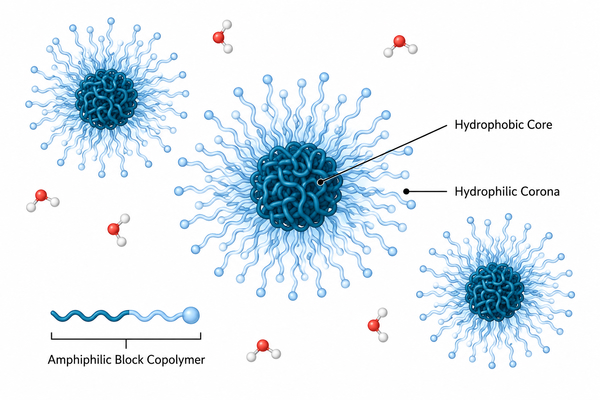 Fig. 1. Core-shell structure of polymeric micelles in aqueous media (BOC Sciences Authorized).
Why Amphiphilic Block Copolymers Self-Assemble in Aqueous Media
The self-assembly of amphiphilic block copolymers is driven by a reduction in the free energy of the system. When one block is solvophilic and the other is solvophobic in water, the polymer chains reorganize to reduce the interfacial penalty associated with exposing the hydrophobic segment to the aqueous environment. At the same time, the hydrophilic block remains solvated and stabilizes the aggregate. The resulting balance of core condensation, corona stretching, chain packing, and interfacial tension determines whether micelles form, what their size range is, and how stable they remain under dilution or environmental stress. In practical terms, polymeric micelles are an expression of molecular design translated into mesoscale colloidal structure.
How Polymeric Micelles Differ from Conventional Micelles
Conventional micelles are usually formed by low-molecular-weight surfactants that assemble dynamically and often dissociate readily when the surrounding concentration decreases. By contrast, polymeric micelles arise from macromolecular amphiphiles with much larger molecular weight, slower chain exchange, and typically much lower CMC values. These differences are highly consequential in delivery systems because structural persistence under dilution is far more achievable with polymeric micelles than with conventional surfactant micelles. This is one reason why polymeric micelles are often favored over conventional micelles when the formulation must tolerate dilution, redistribution, or extended handling without rapid disassembly.
Polymeric Micelles vs Polymeric Nanoparticles and Other Nanocarriers
Polymeric micelles should also be separated conceptually from broader polymer nanoparticle systems. Nanoparticles can be matrix-based, nanocapsular, crosslinked, or self-assembled, and not all of them possess the reversible core-shell arrangement typical of micelles. Micelles are especially useful when the design objective is to exploit amphiphilic block copolymer self-assembly, low interfacial energy, and tunable loading domains. In contrast, a polymer nanoparticle strategy may be more appropriate when a denser matrix, slower diffusion pathway, or more rigid morphology is needed. Researchers comparing broader carrier logic can also refer to carrier selection across polymer, lipid, and inorganic platforms.
Why Polymeric Micelle Stability Matters More Than Simple Micelle Formation?
In formulation work, the fact that a polymer can form micelles is only the starting point. A useful polymeric micelle system must preserve structural integrity during dilution, storage, processing, and interaction with complex media. Stability therefore becomes the first true design criterion. Without adequate stability, the apparent advantages of nanoscale loading, improved dispersion, and controlled architecture can disappear quickly because of dissociation, drug leakage, fusion, or corona collapse. Understanding stability means looking beyond whether micelles appear in water and toward whether they remain functionally coherent under realistic formulation conditions.
Thermodynamic Stability and Kinetic Stability in Polymeric Micelles
Thermodynamic stability refers to whether micelle formation is favored at equilibrium under a given set of conditions. Kinetic stability refers to how slowly the assembled state reorganizes, exchanges chains, or disassembles when conditions change. Polymeric micelles are often valued because even when the system is only moderately stable thermodynamically, the high molecular weight of the amphiphilic chains can create a significant kinetic barrier to rapid dissociation. This distinction matters because many delivery formulations behave not as perfect equilibrium systems, but as metastable colloids whose usefulness depends on sufficiently slow structural rearrangement over the relevant handling or testing window.
Why Dilution Stability Is Critical for Drug Delivery Systems
Dilution is one of the most important practical stresses a micellar formulation will encounter. When a formulation is dispersed into a much larger aqueous volume, the polymer concentration can fall toward or below the threshold that supports stable assembly. If the micelles respond by dissociating rapidly, the loaded compound may precipitate, redistribute, or leak into the surrounding medium. As a result, evaluating stability under dilution is not a secondary consideration but a central part of deciding whether a polymeric micelle system can function as intended. A structurally convincing micelle observed at concentrated bench conditions may behave very differently after realistic dilution.
The Relationship Between Low CMC and Structural Persistence
A low CMC is often associated with better persistence because the polymeric micelles remain favored even at relatively low total polymer concentration. This is one reason why amphiphilic block copolymers are attractive for advanced delivery design. However, low CMC should be viewed as one indicator within a broader stability framework rather than as a stand-alone guarantee. Some systems may exhibit a low apparent CMC but still undergo slow core reorganization, payload redistribution, or interactions with other solutes that compromise real formulation robustness. Structural persistence depends not only on concentration thresholds but also on core cohesion, corona protection, and the effect of the payload itself.
Common Destabilization Factors in Biological and Formulation Environments
Polymeric micelles can be destabilized by multiple external variables. Changes in ionic strength may alter corona behavior or shield charged interactions. Buffer composition can modify solvation, interfacial tension, or polymer conformation. Temperature shifts may increase chain mobility and accelerate exchange. Contact with other amphiphiles, proteins, or co-solvents may extract components from the micelle or compete for the core environment. Even freeze-thaw treatment or solvent residue can shift the assembled structure. A rational formulation strategy therefore evaluates stability not only in pure water, but also in buffers and media that better reflect the intended preparation and testing context.
How Drug Incorporation Can Strengthen or Weaken Micelle Stability
Drug loading is not neutral with respect to structure. A compatible hydrophobic guest can sometimes strengthen the core by increasing packing density or reinforcing favorable noncovalent interactions. In other cases, the loaded compound swells the core, disrupts chain packing, promotes heterogeneity, or causes gradual leakage because the core is unable to accommodate it uniformly. This means that empty micelle stability and loaded micelle stability are not equivalent. The relevant question is whether the assembled state remains coherent after the payload has been incorporated at the intended ratio and under the intended processing conditions.
How Block Copolymer Design Controls Polymeric Micelle Formation?
Polymeric micelles are fundamentally a materials design problem. Their size, loading behavior, colloidal persistence, and response to environmental change all originate from the molecular architecture of the copolymer. The hydrophilic block, hydrophobic block, total molecular weight, block ratio, and topology together determine how strongly self-assembly is favored and what type of micelle results. This is why successful polymeric micelle development begins with rational block copolymer selection rather than trial-and-error formulation alone.
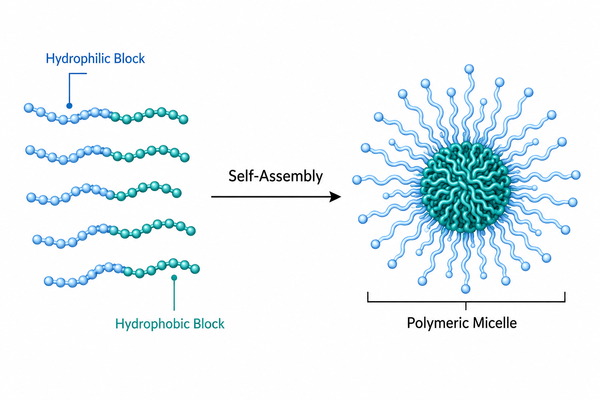 Fig. 2. Block copolymer architecture governs polymeric micelle assembly behavior (BOC Sciences Authorized).
Hydrophilic-Hydrophobic Balance and the Driving Force for Self-Assembly
The most basic design variable is the balance between the solvophilic and solvophobic segments. If the hydrophilic block is too dominant, the polymer may remain too soluble to form a well-defined core-shell aggregate. If the hydrophobic block is too dominant, the system may aggregate excessively, broaden in size distribution, or transition toward other morphologies. A useful micelle-forming polymer must therefore maintain a balance that favors nanoscale self-assembly while preserving an adequately hydrated corona. In practice, this balance is not universal; it must be adjusted according to the chemical identity of both blocks, the solvent environment, and the intended payload.
Molecular Weight and Block Ratio Effects on Micelle Size and Integrity
Molecular weight affects both chain flexibility and the energetic cost of micelle formation. Larger hydrophobic blocks often create a more cohesive core and can reduce the tendency toward rapid dissociation, but they may also increase particle size or slow equilibration. Meanwhile, the hydrophilic block influences corona thickness, steric stabilization, and hydration. The ratio between the two blocks therefore shapes not only the final particle dimension, but also interfacial curvature, chain packing frustration, and the degree of kinetic trapping. Small shifts in block ratio can change a system from well-behaved micelles to broad, unstable aggregates, which is why polymer selection must be tied to measurable colloidal outcomes.
Diblock, Triblock, and Grafted Architectures in Micelle Design
Architecture matters as much as composition. Diblock copolymers are common because they provide a direct route to classical core-shell micelles with interpretable structure-property relationships. Triblock systems can introduce different packing behavior, altered corona arrangement, or a greater tendency toward bridging depending on block sequence. Grafted or comb-like polymers may form more complex assemblies because the hydrophilic and hydrophobic moieties are distributed differently along the chain. The right choice depends on whether the formulation goal is straightforward nanoscale loading, increased core cohesion, responsive behavior, or enhanced interfacial functionality.
Common Block Copolymer Systems Used for Polymeric Micelles
Frequently used systems include combinations built from PEG-like hydrophilic segments and biodegradable or hydrophobic polyester-based segments such as PLA-, PCL-, or PLGA-related blocks. These materials are popular because they offer a practical combination of aqueous processability, hydrophobic domain formation, and tunable chain length. Depending on the design target, formulators may also explore copolymers, PEG derivatives, polyester materials, and biodegradable polymers to refine micelle structure, loading domain chemistry, and colloidal behavior. For polyester-based hydrophobic segments, polylactic acid remains one representative reference material within broader amphiphilic block design.
How Core Chemistry Influences Loading Space and Chain Packing
The hydrophobic block does more than simply create a nonpolar region. Its chain rigidity, crystallization tendency, polarity, and capacity for specific interactions all affect the internal microenvironment of the core. A tightly packed, semi-crystalline core may improve structural persistence but limit accommodation of bulky payloads. A softer or more amorphous core may allow greater loading flexibility but could also promote faster diffusion and leakage. The optimal core chemistry therefore depends on how the loaded molecule interacts with the polymer, whether the formulation prioritizes retention or release, and how much structural reorganization can be tolerated during preparation and storage.
| Block Copolymer System | Hydrophilic Segment | Hydrophobic Segment | Main Strength | Main Limitation | Suitable Delivery Objective |
|---|---|---|---|---|---|
| PEG-PLA Type | Hydrated, steric corona | Moderately hydrophobic polyester core | Balanced self-assembly and processability | Core compatibility depends strongly on payload chemistry | General hydrophobic drug incorporation and tunable nanoscale formulations |
| PEG-PCL Type | Hydrophilic stabilizing shell | More flexible hydrophobic core | Useful core environment for certain soft hydrophobic molecules | Core mobility may increase redistribution for some payloads | Micelles requiring adaptable core packing and prolonged colloidal integrity |
| PEG-PLGA Type | Water-compatible corona | Amorphous degradable core domain | Broad formulation relevance and tunable composition | Composition changes can shift assembly behavior markedly | Micelle systems needing composition-driven optimization of loading and release |
| Polyion Complex Micelles | Neutral or hydrophilic shell | Ionic complexed inner domain | Useful for charged cargo or interaction-driven assembly | Highly sensitive to ionic strength and medium composition | Charged payload organization and functional micelle design |
Critical Micelle Concentration: What It Means and How to Use It
CMC is one of the most frequently cited parameters in the polymeric micelle literature, but it is also one of the most oversimplified. It is often treated as a single performance score, even though its meaning depends on how it was measured, under what conditions, and what aspect of assembly one wants to predict. For formulation design, CMC is useful because it connects concentration, self-assembly, and dilution resistance. Yet it should be interpreted alongside other colloidal and structural data rather than in isolation.
What the Critical Micelle Concentration Represents
The CMC is the concentration range at which amphiphilic polymer chains begin to self-associate significantly into micellar aggregates instead of remaining primarily as individual chains in solution. Below this range, unimers dominate; above it, assembled structures become increasingly prevalent. For polymeric micelles, the transition is often less sharp than in conventional surfactant systems because the polymers are larger, structurally more diverse, and slower to equilibrate. Even so, the CMC provides a useful practical reference point for understanding when self-assembly becomes favorable in a given solvent environment.
Why Polymeric Micelles Usually Show Lower CMC Than Conventional Micelles
Amphiphilic block copolymers generally possess larger hydrophobic segments and greater chain connectivity than small-molecule surfactants, making the assembled state more favorable and dissociation less rapid. This often leads to lower CMC values, which in turn suggests better persistence under dilution. The covalent linkage of the hydrophilic and hydrophobic blocks also ensures that both domains participate cooperatively in the assembly process. From a design standpoint, a lower CMC often reflects stronger overall driving forces for core formation and reduced readiness to revert completely to unimers when concentration drops.
How CMC Relates to Dilution Resistance and Formulation Window
A micelle system with a low CMC typically retains assembled structures over a wider concentration range, giving the formulation greater tolerance to dilution during handling or downstream evaluation. This matters because real formulations are often exposed to nonideal conditions, including changes in total concentration, contact with buffers, and sequential dilution steps during preparation or analytical testing. A lower CMC therefore broadens the usable formulation window. However, the designer should ask a more practical question: not only whether micelles still exist after dilution, but also whether they remain monodisperse, loaded, and structurally coherent.
Common Experimental Methods for Measuring CMC
CMC can be determined by several methods, each based on a property that changes during self-assembly. Fluorescence probing is widely used because hydrophobic probes can report changes in local microenvironment as the core forms. Surface tension methods are more traditional but may be less sensitive for some polymeric systems. Light scattering, conductivity, dye solubilization, and spectroscopic approaches can also be informative depending on polymer chemistry and concentration range. The choice of method should be guided by whether the signal is sensitive to early aggregation, well-formed micelles, or environmental changes relevant to the intended formulation conditions.
Limitations of Using CMC Alone to Judge Micelle Quality
CMC does not reveal whether the micelles are narrow in size distribution, whether they carry the payload uniformly, or whether they survive in complex media. Two systems with similar CMC values may behave very differently in terms of drug leakage, morphology, or reproducibility. Moreover, the apparent CMC can vary with method, ionic conditions, temperature, and probe selection. For these reasons, CMC should be integrated with particle size analysis, structural imaging, loading measurements, and medium-specific stability testing before any strong conclusions are drawn about formulation quality.
Drug Loading in Polymeric Micelles: Compatibility, Capacity, and Retention
Drug loading is often described too simply as the partitioning of a hydrophobic compound into a hydrophobic micelle core. In reality, successful loading depends on a more detailed compatibility problem involving intermolecular interactions, core mobility, steric fit, and the effect of the payload on the assembled structure itself. This is why some compounds load efficiently yet leak rapidly, whereas others show lower apparent loading but better long-term retention. Rational formulation requires understanding both how much of a payload can be incorporated and how stably it remains associated with the micelle.
Why Drug-Polymer Compatibility Determines Loading Success
Loading success depends first on whether the payload is sufficiently compatible with the core-forming block. Compatibility is governed not only by overall hydrophobicity but also by local polarity, aromaticity, hydrogen-bonding capacity, and molecular geometry. A payload that is too dissimilar from the core may partition only weakly, causing precipitation during preparation or rapid escape afterward. Conversely, when the drug and the hydrophobic domain share favorable noncovalent interactions, the core can accommodate the guest more homogeneously and the resulting micelles may show improved physical persistence.
Core-Drug Interactions Beyond Simple Hydrophobic Partitioning
Hydrophobic partitioning is important, but it is rarely the whole story. Hydrogen bonding between the payload and polymer segments can stabilize loading. Aromatic interactions may improve the accommodation of rigid ring-containing molecules. Dipolar interactions can also shift retention behavior. In some formulations, a modestly hydrophobic payload loads better than an extremely hydrophobic one because its shape and interaction profile allow more efficient packing within the core. Understanding these interaction modes can guide block selection more effectively than using a single polarity descriptor alone.
Loading Capacity vs Encapsulation Efficiency: How to Interpret Both
Loading capacity and encapsulation efficiency are related but distinct. Loading capacity expresses how much payload is present relative to the mass of the final carrier, while encapsulation efficiency indicates how much of the initially introduced payload is retained after preparation. A system may show high encapsulation efficiency simply because the initial drug amount was low, yet still offer poor practical loading capacity. Conversely, aggressive loading can increase capacity but compromise micelle integrity. Proper interpretation requires considering both metrics together along with the resulting size, dispersity, and structural stability of the loaded micelles.
How Drug Loading Changes Micelle Size, PDI, and Core Packing
Once a payload enters the core, it becomes part of the internal packing problem. The micelle may swell, become more compact, or develop a broader size distribution depending on how the guest reorganizes the hydrophobic block. Increases in particle diameter or PDI after loading can indicate genuine encapsulation, but they can also signal heterogeneous loading or incipient instability. Therefore, post-loading characterization is not optional. The loaded structure, not the empty template, is the true formulation entity that must be optimized and evaluated.
Common Reasons for Premature Drug Leakage from Polymeric Micelles
Leakage often results from insufficient core-drug affinity, excess free volume in the core, incomplete equilibration during preparation, or destabilization during dilution and storage. Residual solvent can transiently support loading but allow the payload to diffuse out once removed. Competitive interactions with proteins or other media components may also extract the compound. In some cases, the micelles remain present but the payload redistributes away from the core, giving the false impression that the structure is still functioning properly. Effective formulation development therefore measures both carrier persistence and payload retention, not one without the other. For formulation-specific solubilization logic, see polymers for small-molecule drug delivery.
Looking for Custom Polymeric Micelle Design and Characterization Support?
BOC Sciences supports amphiphilic polymer selection, polymeric micelle preparation, and multi-technique characterization to help researchers optimize stability, loading behavior, and formulation performance.
How to Characterize Polymeric Micelles Correctly?
Proper characterization is the bridge between a plausible formulation concept and a technically defensible delivery system. Polymeric micelles cannot be understood through a single readout because their performance depends on size, size distribution, morphology, internal organization, loading state, and environmental stability. A rigorous characterization strategy should therefore combine orthogonal methods so that each technique answers a different structural or formulation question. This approach is far more reliable than relying on one attractive dataset in isolation.
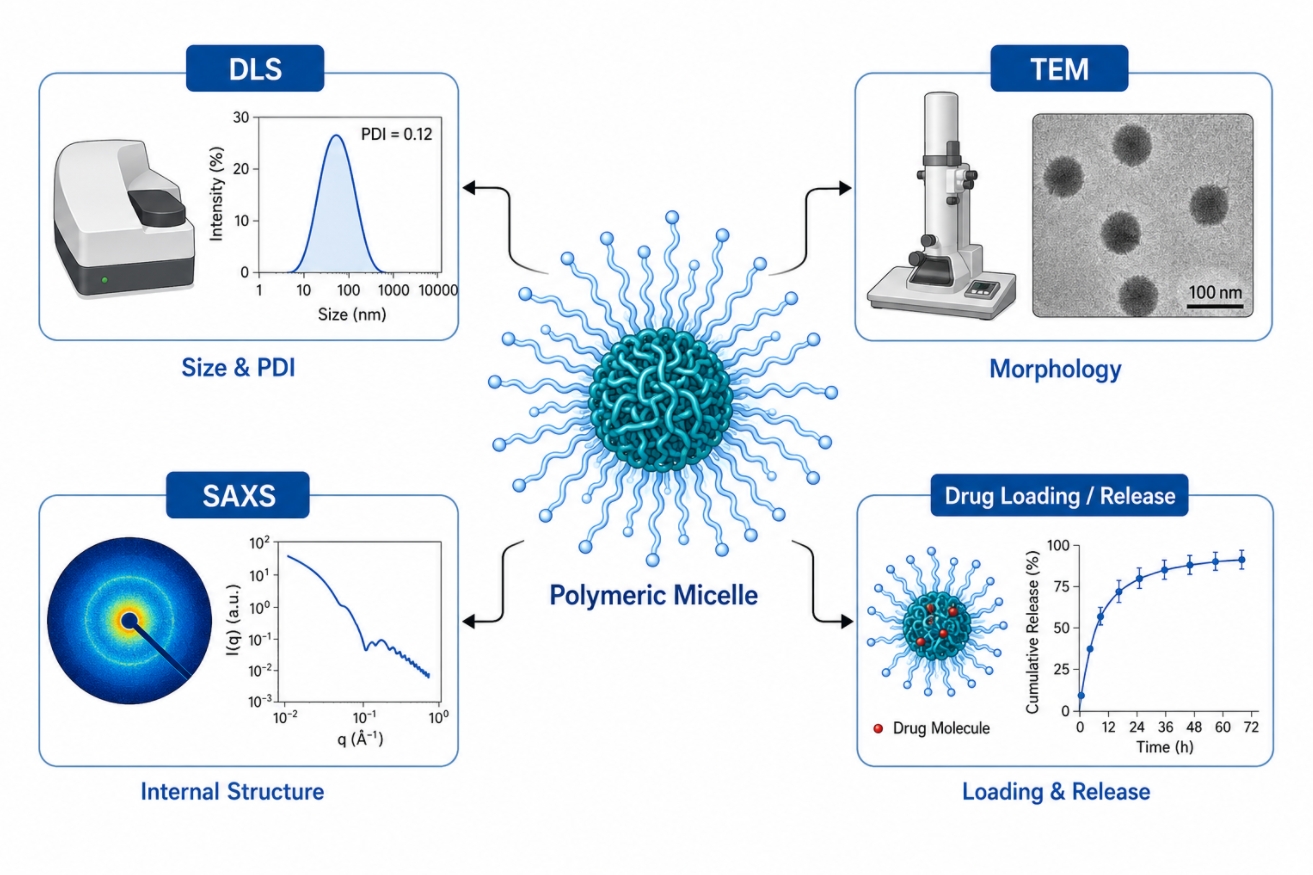 Fig. 3. Integrated methods for polymeric micelle characterization and evaluation (BOC Sciences Authorized).
What Dynamic Light Scattering Can Tell You About Size and PDI
Dynamic light scattering is often the first technique used because it provides a convenient estimate of hydrodynamic size and polydispersity index. These parameters are useful for screening whether a formulation is in the nanoscale range and whether the particle population is relatively narrow or broadly distributed. However, DLS measures fluctuations in scattered light intensity and reports an apparent hydrodynamic state rather than direct visual shape. It is therefore most valuable as a rapid comparative tool, especially when used to track how size and PDI change after loading, dilution, buffer exchange, or storage.
When Electron Microscopy Is Needed for Morphology Verification
Electron microscopy becomes important when direct evidence of shape and structural uniformity is required. TEM can reveal whether the sample contains roughly spherical assemblies, irregular aggregates, or mixed populations. Cryo-TEM can be especially valuable because it better preserves hydrated morphology and reduces some drying artifacts associated with conventional sample preparation. Imaging does not replace colloidal measurements, but it adds a crucial layer of confidence by showing whether the supposed micelles correspond visually to discrete nanoscale structures rather than loosely interpreted scattering data.
How SAXS and Related Methods Help Reveal Internal Organization
Small-angle scattering methods are highly useful when the goal is to understand internal organization, average structural dimensions, and core-shell contrast at a population level. These methods can help confirm whether the assemblies behave consistently with a micellar model and whether the internal structure changes after drug loading or solvent transition. While they require more specialized analysis than routine DLS, scattering techniques are valuable for formulations where internal packing, shell thickness, or structural transitions need to be understood quantitatively rather than inferred indirectly.
What to Measure for Drug Loading, Release, and Colloidal Stability
Beyond structural analysis, characterization must include formulation performance metrics. Drug loading content and encapsulation efficiency clarify how much payload the micelles actually carry. Release testing helps determine whether the payload remains associated or diffuses out too readily under defined conditions. Colloidal stability should be assessed through repeated size analysis, visual clarity, dispersity tracking, and where relevant, quantification of free versus associated payload. A convincing formulation dataset shows that the micelle is not only present, but also functionally organized around a retained payload.
Why Biorelevant Media Testing Is Necessary Beyond Water and Buffer
A formulation that appears stable in deionized water may behave very differently in buffered salt solutions, protein-containing media, or formulations containing co-solutes. Testing in biorelevant media helps reveal whether corona stabilization is sufficient, whether the payload is extracted by surrounding components, and whether the aggregate remains colloidally stable under more demanding conditions. This type of testing is essential because it exposes weaknesses that simple bench-top water data can hide. It is also one of the most useful ways to distinguish conceptually interesting micelles from genuinely robust formulations. Related analytical support can be aligned with polymer characterization services and polymer structure morphology analysis.
| Method | Main Purpose | Key Output | Best Application Stage | Main Limitation |
|---|---|---|---|---|
| DLS | Rapid screening of colloidal size and distribution | Hydrodynamic diameter and PDI | Initial screening, loading comparison, stability tracking | Does not directly visualize morphology or internal structure |
| TEM/Cryo-TEM | Morphology verification | Particle shape and visible heterogeneity | Confirmation of micelle presence and structural uniformity | Sample preparation may introduce artifacts; not always fully representative |
| SAXS | Population-level internal structural analysis | Core-shell dimensions and structural model support | Advanced structure evaluation and formulation comparison | Requires model-based interpretation and specialized analysis |
| Chromatographic Assay | Payload quantification | Loading content and encapsulation efficiency | After preparation and during release studies | Must be combined with structural data to interpret formulation meaningfully |
Preparation Routes and Process Parameters That Shape Micelle Quality
Polymeric micelle quality is not determined by polymer composition alone. The route used to prepare the system influences chain organization, solvent history, loading distribution, and the degree of equilibration reached before the final dispersion is obtained. This means that two formulations using the same polymer and payload can produce different outcomes if they are prepared by different methods or under different processing conditions. Process awareness is therefore essential for reproducible micelle development.
Direct Dissolution, Dialysis, and Thin-Film Hydration
Direct dissolution is straightforward when both polymer and payload can be introduced into a compatible solvent sequence without uncontrolled precipitation. Dialysis is useful when a common solvent is first employed and then exchanged gradually for water, allowing self-assembly to occur during solvent displacement. Thin-film hydration can be effective when polymer and payload are co-dissolved, solvent is removed, and the residue is later hydrated to trigger assembly. Each method creates a distinct pathway for nucleation and chain rearrangement, so the resulting micelles can differ in loading distribution and structural homogeneity. For a broader process discussion, see how polymer micelles form and how to prepare them.
Solvent Selection and Solvent Removal Effects on Self-Assembly
The solvent environment determines the initial state of the polymer chains, the degree of payload solubilization, and the rate at which hydrophobic domains collapse into a core. Solvents that interact too strongly with the hydrophobic block may delay assembly, whereas abrupt solvent removal may trap nonequilibrium structures. Residual solvent can also influence apparent loading and short-term size measurements, leading to misleading conclusions about stability. Careful solvent choice and controlled removal are therefore central to achieving interpretable and reproducible micelle formation.
How Process Conditions Influence Particle Size and Distribution
Parameters such as polymer concentration, drug-to-polymer ratio, mixing intensity, hydration rate, temperature, and solvent addition profile all affect the pathway of self-assembly. Rapid nucleation may produce smaller structures, but it can also increase heterogeneity if mixing is uneven. Slower equilibration may improve uniformity in some systems, yet promote drug redistribution in others. Particle size and PDI are therefore process-dependent outputs rather than fixed material constants. Optimization must identify the set of conditions that consistently generates the intended colloidal state.
Reproducibility Challenges in Micelle Preparation
Many reproducibility problems arise because micelle preparation appears simple while remaining highly sensitive to small operational variations. Minor differences in solvent quality, hydration order, evaporation completeness, or polymer batch properties can shift the assembly pathway enough to alter size, loading, or stability. Reproducible development requires explicit control of preparation steps, not just nominal recipe composition. This is particularly important when a formulation is expected to serve as a platform rather than a one-time laboratory observation.
Considerations for Scale-Up and Batch Consistency
Scale-up is not merely increasing volume; it changes mass transfer, solvent removal dynamics, and the time profile of assembly. A method that performs well on a small scale may broaden in size or lose loading consistency when the same nominal protocol is applied at a larger scale. For this reason, scalable micelle development usually favors methods with controllable solvent exchange, predictable mixing, and a clear pathway to batch reproducibility. Analytical checkpoints must be embedded into the process so that consistency is demonstrated rather than assumed.
When to Choose Polymeric Micelles for Different Drug Delivery Tasks
Polymeric micelles are not a universal answer for every formulation challenge. Their strongest value appears when the delivery problem aligns with what amphiphilic self-assembly does best: creating a nanoscale compartmentalized carrier with a tunable hydrophobic domain and a stabilizing hydrophilic corona. Choosing them appropriately requires matching the platform to the physicochemical nature of the payload and to the desired formulation behavior. This decision is best made task by task rather than by following a single platform preference.
Polymeric Micelles for Poorly Soluble Small Molecules
One of the most established uses of polymeric micelles is the incorporation of compounds with poor aqueous compatibility. In these cases, the micelle core can act as a solubilizing domain that improves dispersion behavior and reduces the need for aggressive co-solvent systems. This use case is explored in more detail in polymeric micelles for poorly soluble drugs. Even here, however, success still depends on compatibility, retention, and process reproducibility rather than on hydrophobicity alone.
Polymeric Micelles for Stimuli-Responsive Release Design
Polymeric micelles are also useful when the polymer architecture is designed to alter assembly behavior in response to changes such as pH, redox environment, temperature, or other trigger conditions. In such systems, the micelle is not only a carrier but also a responsive material platform. Trigger-responsive design usually requires more careful block selection and more extensive structural validation because the same features that permit response can also compromise baseline stability. For this reason, responsive systems should be developed from a clear understanding of both static micelle behavior and trigger-induced rearrangement. Related strategies are discussed in stimuli-responsive polymer micelles and more broadly in stimuli-responsive polymer drug delivery systems.
Polyion Complex and Functional Micelles for Charged Cargo
Not all polymeric micelles rely on a simple hydrophobic core. Polyion complex micelles and other functionalized assemblies can organize charged components through electrostatic association, often creating a more specialized internal domain. These systems are relevant when the cargo or functional segment cannot be described primarily through hydrophobic partitioning. Because they are more sensitive to ionic strength and surrounding medium composition, they demand careful medium-specific stability testing. Their design logic differs from that of conventional hydrophobic drug-loading micelles and should be approached as a separate materials problem. Readers exploring genetic cargo can extend to polymer-based gene delivery platforms or polymers for nucleic acid delivery.
When Polymeric Micelles Are Not the Best Formulation Choice
Polymeric micelles may be less suitable when the payload is too incompatible with the available core chemistry, when long-term matrix entrapment is needed, or when release control depends more on dense solid architecture than on dynamic self-assembly. In such cases, polymer nanoparticles or microspheres may offer a more appropriate platform. The key is to distinguish between a problem that benefits from reversible nanoscale self-assembly and one that requires a more rigid or longer-acting structural format.
Advanced Polymer Synthesis and Formulation Services
At BOC Sciences, we support polymeric micelle development from the perspective of materials design, formulation logic, and analytical verification. Our capabilities cover amphiphilic block copolymer design, polymer synthesis, side-group and end-group modification, micelle preparation, and multi-method characterization for researchers working on advanced delivery systems. By combining expertise in self-assembly, polymer architecture control, and structure-property evaluation, we help clients move from a general micelle concept to a better-defined formulation strategy with clearer decision points around stability, loading, and characterization.

Custom Amphiphilic Polymer Design
- Design of diblock, triblock, and functional amphiphilic copolymers for micelle formation.
- Adjustment of hydrophilic-hydrophobic balance to support targeted assembly behavior.
- Control over molecular weight and block ratio for structure-property optimization.
- Support for polymer selection based on payload compatibility and formulation goals.
Polymer Functionalization & Modification
- End-group and side-group modification for advanced micelle functionality.
- Tailored surface chemistry to refine corona properties and interfacial behavior.
- Support for responsive, interaction-driven, and specialized micelle architectures.
- Integration with polymer modification services for custom development workflows.
Micelle Preparation & Optimization
- Support for dialysis, solvent exchange, hydration, and related micelle preparation routes.
- Optimization of particle size, PDI, and payload incorporation behavior.
- Evaluation of preparation variables that affect reproducibility and colloidal quality.
- Technical assistance for polymer micelle synthesis and formulation refinement.
Characterization & Structural Analysis
- Integrated characterization support covering size, morphology, and structural evaluation.
- Analytical workflows linked to loading, stability, and formulation decision-making.
- Access to polymer characterization service and structure morphology analysis.
- Guidance on choosing analytical methods for development-stage questions.
Do You Need A Consultation?
BOC Sciences provides tailored support for polymeric micelle design, polymer synthesis, formulation optimization, and characterization to help clarify your development strategy.
Unlock New Possibilities with Tailored and High-Performance Polymers
| Cat. No. | Product Name | CAS No. | Inquiry |
|---|---|---|---|
| 25036-13-9 | Melamine-urea-formaldehyde | 25036-13-9 | Bulk Inquiry |
| 52305-30-3 | Poly(L-lactide-co-D,L-lactide) | 52305-30-3 | Bulk Inquiry |
| 113883-70-8 | Poly(L-lactide-co-trimethylene carbonate) | 113883-70-8 | Bulk Inquiry |
| 26658-88-8 | Polyacrylonitrile. co-polymer with 6% methyl acrylate | 26658-88-8 | Bulk Inquiry |
| 30965-26-5 | Poly(1,4-butylene terephthalate) | 30965-26-5 | Bulk Inquiry |
| 83120-66-5 | Poly(3-Hydroxyvalerate) | 83120-66-5 | Bulk Inquiry |
| 24937-78-8 | Poly(ethylene-vinyl acetate) | 24937-78-8 | Bulk Inquiry |
| 9003-22-9 | Vinyl chloride-vinyl acetate copolymer | 9003-22-9 | Bulk Inquiry |
| 25067-34-9 | Poly(vinyl alcohol-co-ethylene) | 25067-34-9 | Bulk Inquiry |
| 25655-35-0 | Polybutadiene, maleinized | 25655-35-0 | Bulk Inquiry |
Frequently Asked Questions
-
What makes polymeric micelles stable in diluted environments?
Polymeric micelles remain more stable under dilution when their amphiphilic block copolymers have strong driving forces for self-assembly, low CMC values, and cohesive core domains. Stability also depends on slow chain exchange, adequate corona hydration, and whether loaded payloads reinforce rather than disrupt internal packing after dilution into larger aqueous volumes.
-
How do I select the right block copolymer for polymeric micelles?
Block copolymer selection should be based on hydrophilic-hydrophobic balance, block ratio, molecular weight, and the chemistry of the core-forming segment. The best choice is the one whose self-assembly behavior, loading compatibility, and colloidal stability align with the intended formulation task rather than simply using a commonly reported polymer pair.
-
Is a low CMC enough to prove a good polymeric micelle formulation?
A low CMC is useful because it suggests persistence under dilution, but it does not prove that the formulation is well designed. Micelle quality also depends on particle size distribution, morphology, payload retention, reproducibility, and behavior in relevant media. CMC should therefore be interpreted together with broader structural and performance data.
-
Which drugs are most suitable for polymeric micelle loading?
Drugs are most suitable for polymeric micelle loading when they are compatible with the core-forming block in terms of hydrophobicity, polarity, molecular shape, and noncovalent interaction potential. Good candidates not only enter the core during preparation but also remain retained without causing broad size distribution, instability, or rapid leakage afterward.
-
Why are multiple characterization methods needed for polymeric micelles?
No single method can capture every important feature of polymeric micelles. DLS estimates size and dispersity, microscopy verifies morphology, scattering methods probe internal organization, and analytical assays quantify loading and release. Combining methods is necessary because a structurally plausible micelle is not automatically a stable or functionally reliable formulation.
-
When should polymeric micelles be chosen over polymer nanoparticles?
Polymeric micelles are preferable when the formulation problem benefits from amphiphilic self-assembly, nanoscale core-shell organization, and a tunable hydrophobic domain for payload accommodation. Polymer nanoparticles may be more suitable when denser matrix entrapment, slower diffusion, or greater structural rigidity is required to support the intended delivery strategy.